
22 Rajab Niyaz (Konday): History, Significance & Shia Perspective
Introduction
Among the many spiritually significant days in the Islamic calendar, 22 Rajab holds a unique place—particularly within South Asian Shia communities. While Rajab itself is a sacred month, the 22nd of Rajab is widely known due to the practice commonly referred to as “22 Rajab Niyaz” or “Konday”.
22 Rajab Niyaz, commonly known as Konday, is a practice deeply rooted in the religious and cultural life of many Shia Muslim families, particularly in South Asia. Every year, as the sacred month of Rajab reaches its later days, households prepare simple food, make supplications, and distribute niyaz with sincerity and devotion. For many believers, 22 Rajab is not merely a date on the Islamic calendar; it is a moment of remembrance, gratitude, and renewed spiritual intention.
Rajab itself is one of the four sacred months in Islam, a time associated with mercy, reflection, and increased good deeds. Within this blessed month, different days hold emotional and spiritual significance for believers. Among them, the 22nd of Rajab has gained recognition due to the widespread observance of niyaz, often performed in the name of Allah while remembering the virtues and teachings of the Ahlul Bayt (AS), especially Imam Ja‘far al-Sadiq (AS).
Despite its popularity, many people seek clarity regarding the nature of 22 Rajab Niyaz. Questions such as what this practice represents, how it originated, why it is called Konday, and how it is understood within Shia thought are commonly searched. This article presents a clear, respectful, and comprehensive explanation of 22 Rajab Niyaz, focusing on its background, spiritual meaning, method of practice, and its role in Shia religious culture.
The purpose of this article is to provide understanding rather than confusion, and guidance rather than exaggeration. It aims to explain 22 Rajab Niyaz as it is practiced by Shia Muslims, highlighting intention, charity, remembrance, and community values, while maintaining a balanced and authentic Islamic perspective.
Table of Contents
What Is 22 Rajab Niyaz?
22 Rajab Niyaz refers to a voluntary act of charity and remembrance performed by many Shia Muslims on the 22nd of Rajab. It usually involves:
Preparing simple food
Making intention (niyyah)
Reciting supplications
Distributing food among family, neighbors, or the poor
22 Rajab Niyaz refers to the voluntary preparation and distribution of food with the intention of seeking closeness to Allah. The food is shared among family members, neighbors, friends, and those in need, accompanied by supplication and remembrance. The practice is widely known as Konday, a term that has become synonymous with 22 Rajab Niyaz in many regions.
At its core, niyaz is an act of charity and gratitude. It reflects the Islamic values of generosity, sharing, and caring for others. While it is associated with a specific date, its essence lies in intention rather than ritual form. There is no fixed recipe, no obligatory method, and no prescribed wording. The simplicity of the practice allows it to be accessible to people of all backgrounds and circumstances.
For Shia Muslims, 22 Rajab Niyaz is also a moment to remember the moral and spiritual legacy of the Ahlul Bayt (AS). It is often performed with prayers for guidance, peace, and well-being, both for oneself and for the wider community.
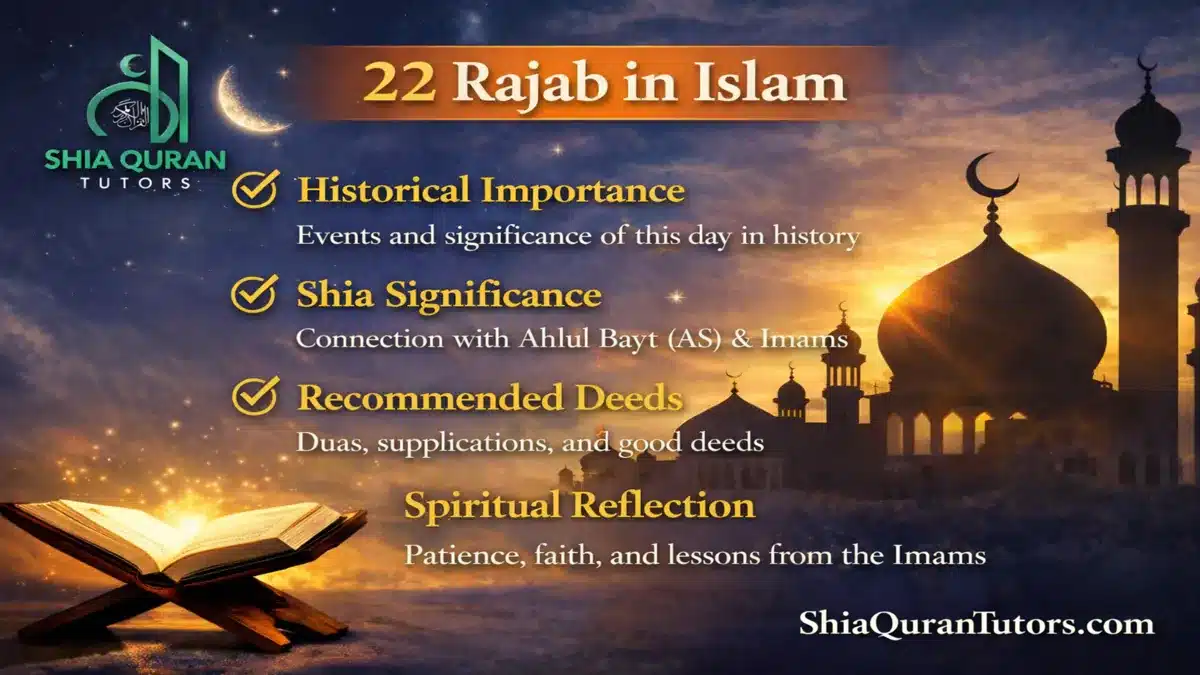
Why Is 22 Rajab Niyaz Called “Konday”?
Meaning of “Konday”
The term Konday originates from the traditional clay bowls that were historically used to distribute food. In earlier times, these bowls were commonly found in households and were considered simple and humble utensils. When food prepared as niyaz was distributed in these bowls, the practice gradually became associated with the name of the container itself.
Over time, even as utensils changed and modern cookware replaced clay bowls, the name Konday remained. Today, the term represents the entire practice rather than the physical object. This evolution reflects how cultural expressions develop while retaining their original spirit of simplicity and sharing.
Cultural Roots
This practice became widespread in:
Indo-Pak subcontinent
Shia households
Female-led household charity traditions
It is important to understand that culture and religion often interact, but they are not the same thing. Shia scholarship acknowledges cultural expressions as long as they do not contradict Islamic principles.
When Is 22 Rajab? (Date & Moon Sighting)
Islamic months are determined by moon sighting, so the exact date may vary.
Expected Dates of 22 Rajab (Approximate)
Pakistan: 11 January 2026
Saudi Arabia / UAE / Qatar: 10 January 2026
USA & Canada: Evening of 9 Jan – 10 Jan 2026
UK / France / Germany: 10 January 2026
Australia: 10 January 2026
Is 22 Rajab Niyaz Mentioned in Early Islamic History?
While early Islamic texts do not record a formal ritual specifically named 22 Rajab Niyaz, the practice of charity and food distribution has always been an integral part of Muslim life. Across centuries, Muslim communities have chosen certain days within sacred months to emphasize these values.
In South Asian Shia culture, household-based religious practices have played a significant role in preserving faith and tradition. Women, in particular, have been instrumental in transmitting these practices from one generation to the next. Through family gatherings, shared meals, and collective supplications, practices like 22 Rajab Niyaz became embedded in daily religious life.
This cultural continuity does not diminish the spiritual value of the practice. Instead, it highlights how faith is lived and experienced within communities. 22 Rajab Niyaz represents a blend of religious intention and cultural expression, centered on charity, remembrance, and communal harmony.
Honest Scholarly Answer
No explicit, universally authenticated narration from the Prophet (PBUH) or the Imams (AS) establishes a fixed ritual called “22 Rajab Niyaz.”
However, this does not automatically make it forbidden.
Islamic jurisprudence—especially within Shia fiqh—distinguishes between:
Wajib (obligatory acts)
Mustahabb (recommended acts)
Mubah (permissible acts)
Charity, feeding others, and making dua are always permissible, regardless of the date—as long as no false religious obligation is claimed.
22 Rajab Niyaz and Imam Ja‘far al-Sadiq (AS)
Many Shia Muslims associate 22 Rajab with Imam Ja‘far al-Sadiq (AS), one of the most revered figures in Islamic history. Imam Ja‘far (AS) is known for his immense contribution to Islamic knowledge, jurisprudence, ethics, and spirituality. His teachings form the foundation of Shia fiqh and have influenced Islamic thought across different schools.
The association of 22 Rajab Niyaz with Imam Ja‘far (AS) reflects love, respect, and gratitude for his legacy. Performing niyaz on this day is seen as a way to remember his teachings, emulate his generosity, and seek inspiration from his life. The focus remains on Allah, with remembrance of the Imam serving as a source of moral guidance.
Why Is Imam Ja‘far (AS) Associated With 22 Rajab?
Many people associate 22 Rajab Niyaz with Imam Ja‘far al-Sadiq (AS) due to:
His immense contribution to Islamic knowledge
His emphasis on charity, patience, and ethics
His central role in Shia jurisprudence
However, Shia scholars clarify:
The niyaz is not an event established by the Imam, but rather performed in his name as an expression of love and remembrance, similar to other acts of voluntary charity.
How 22 Rajab Niyaz (Konday) Is Commonly Performed
Step-by-Step (No Fabrication)
Niyyah (intention) – seeking closeness to Allah
Simple food preparation (sweet or savory)
Dua and remembrance
Distribution among family, neighbors, or the needy
There is no fixed recipe, no fixed dua, and no fixed method.
22 Rajab Niyaz kya hai?
22 Rajab niyaz aik nafl amal hai jo aksar Shia gharanon mein kiya jata hai. Is ka matlab yeh nahi ke yeh koi wajib ibadat hai, balkay yeh sadaqah aur dua ka aik tareeqa hai.
Konday kyun banaye jatay hain?
Konday asal mein mitti ke bartan thay jin mein pehlay zamane mein khana taqseem kiya jata tha. Waqt ke sath yeh lafz niyaz ke sath mashhoor ho gaya.
Spiritual Benefits of 22 Rajab Niyaz
Encourages charity
Strengthens community bonds
Promotes gratitude
Revives remembrance of Ahlul Bayt (AS)
Frequently Asked Questions
What is 22 Rajab Niyaz?
Why is it called Konday?
Is 22 Rajab Niyaz wajib?
Expected Dates of 22 Rajab
Conclusion
22 Rajab Niyaz (Konday) represents a meaningful expression of faith, charity, and remembrance within Shia Muslim communities. Rooted in the sacred atmosphere of the month of Rajab, it brings together spiritual intention and cultural tradition in a simple yet profound way.
By focusing on generosity, gratitude, and remembrance of the Ahlul Bayt (AS), the practice encourages believers to strengthen their connection with Allah and with one another. When understood in its proper context, 22 Rajab Niyaz serves as a reminder that small acts performed with sincerity can carry deep spiritual significance.
May Allah accept sincere intentions, grant understanding, and bless all acts of charity performed in His name.

Start reciting Surah Waqiah full online today. This guide covers the English translation, Roman transliteration, and spiritual benefits for you.

Finding quality religious education is hard. Our online Quran classes for kids provide expert guidance from the comfort of your own home.

Looking for the perfect way to wish your loved ones a blessed Friday? Explore our guide to deep and beautiful Jumma Mubarak Quotes and Duas.