
Hadith e Kisa – The Sacred Event That Defines the Purity of Ahl al-Bayt
Introduction
Hadith e Kisa is one of the most sacred and beloved traditions in Islamic history, describing the blessed gathering of the Prophet Muhammad (ﷺ), Imam Ali (a.s), Lady Fatima (s.a), Imam Hasan (a.s), and Imam Husayn (a.s) under the cloak. This event highlights the divine purity and status of the Ahl al-Bayt (family of the Prophet) and holds deep spiritual meaning for Muslims around the world.
This incident is not a story of sitting together under a cloak but an announcement of heavenly chastity, love, and leadership. Hadith-e-Kisa symbolizes the spirit of Islamic spirituality and the essence of Shia belief in the infallibility (Ismah) of the family of the Prophet.
As Allah Himself made it amply clear in the Qur’an:
“Indeed, Allah only wishes to remove impurity from you, O People of the House, and to purify you completely.”
(Surah Al-Ahzab, 33:33)
This verse, known as Ayat al-Tathir, is the essence of the Hadith-e-Kisa, which speaks of the Ahl al-Bayt being pure.
Historical Background of Hadith-e-Kisa
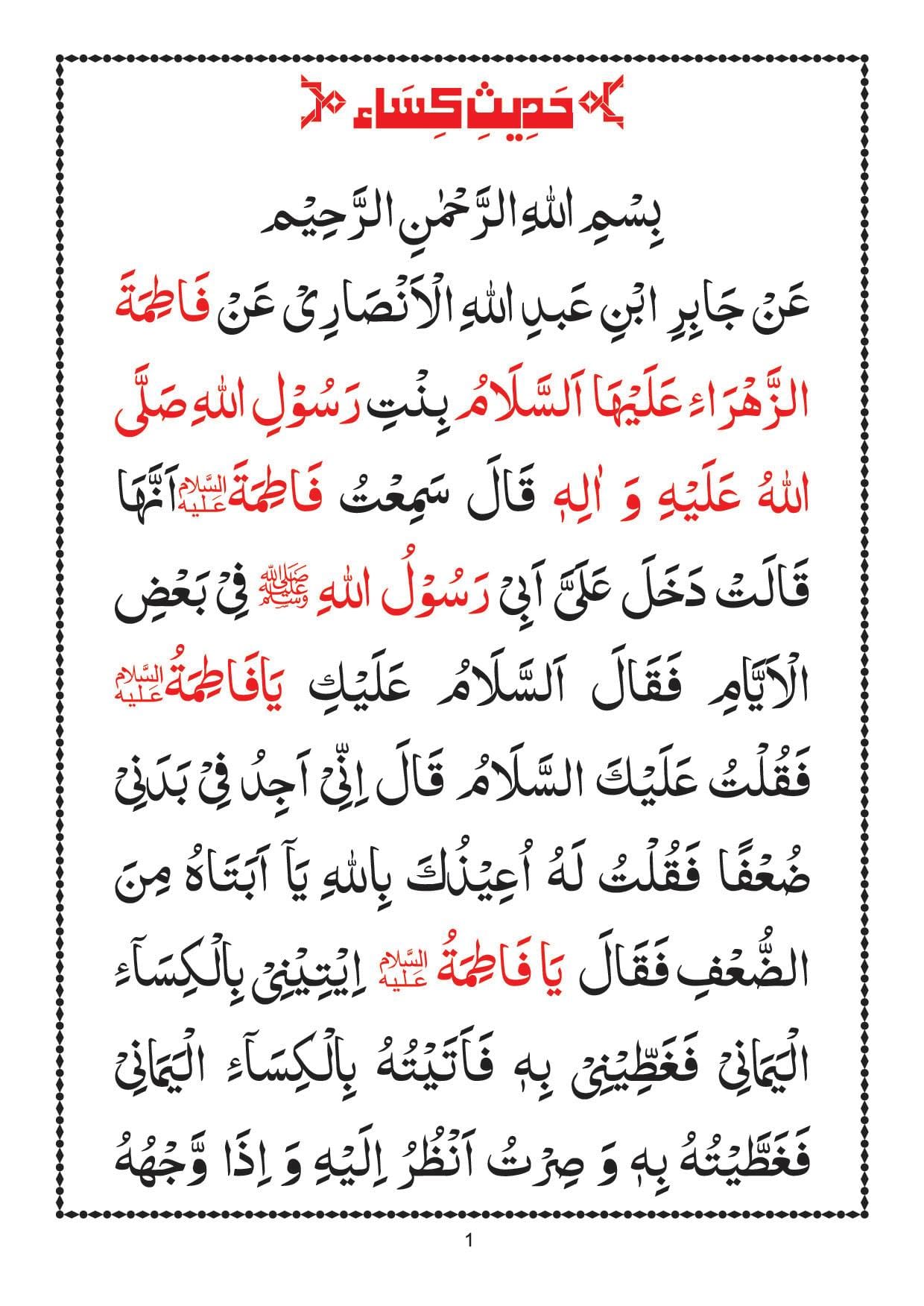
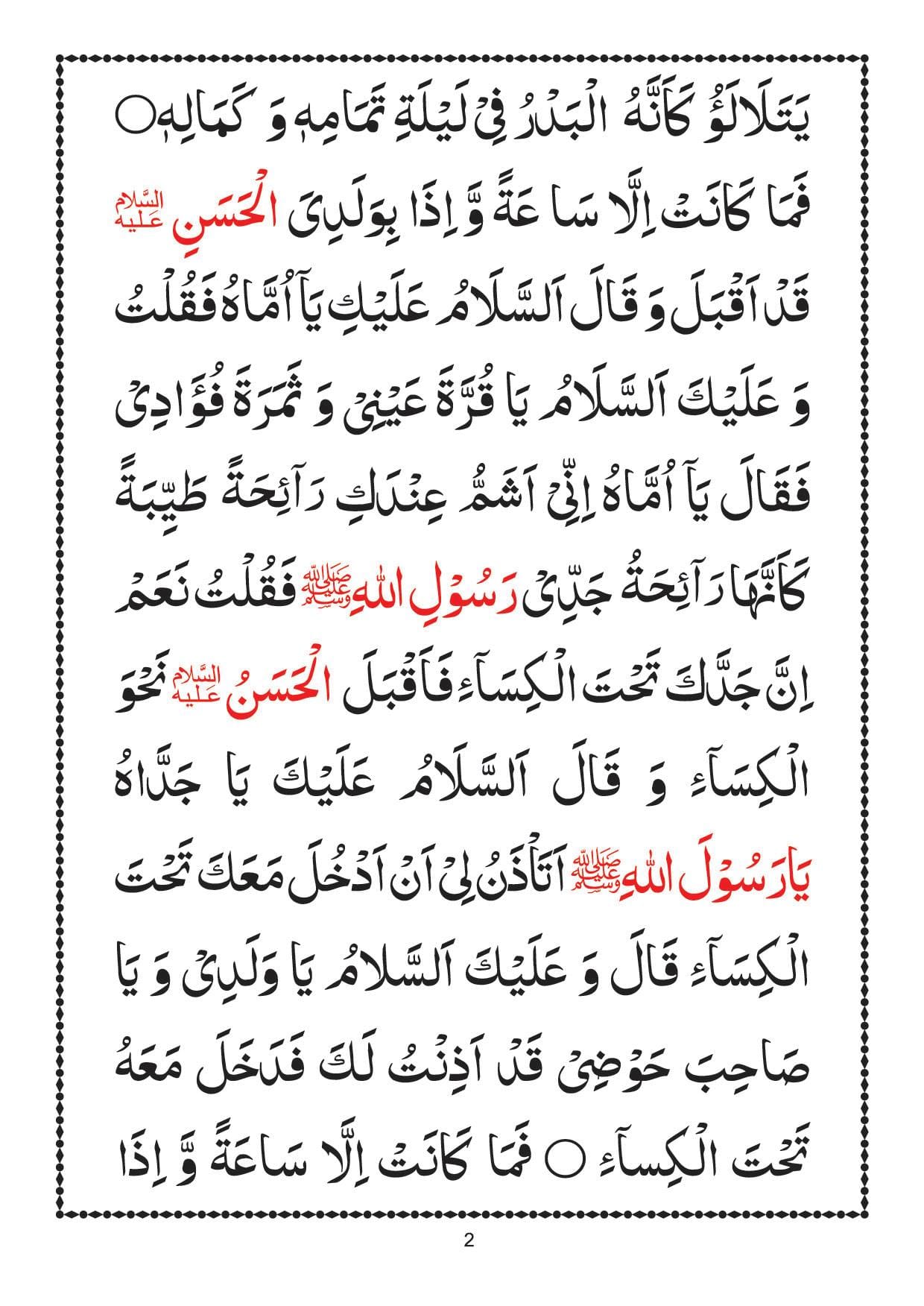
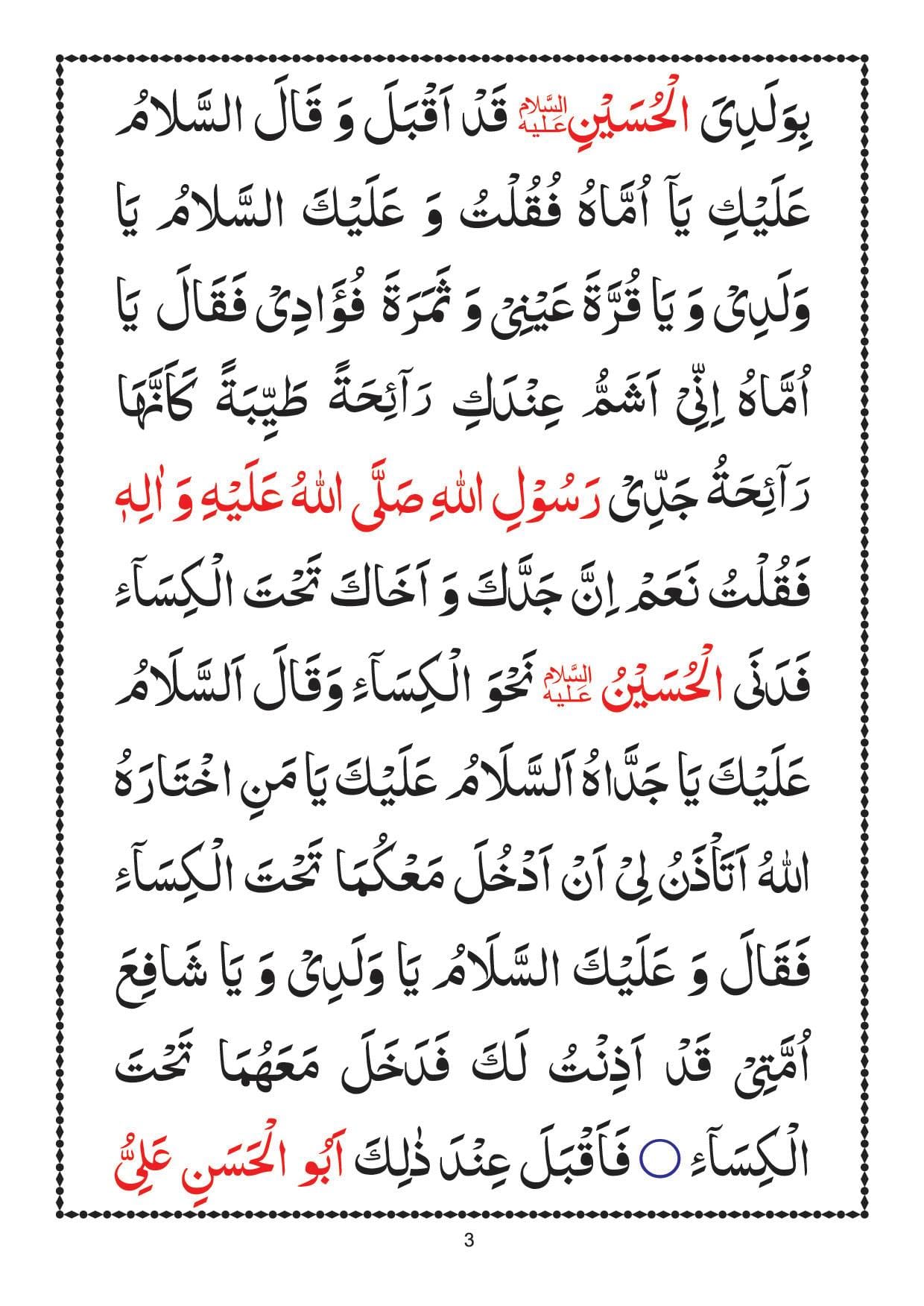
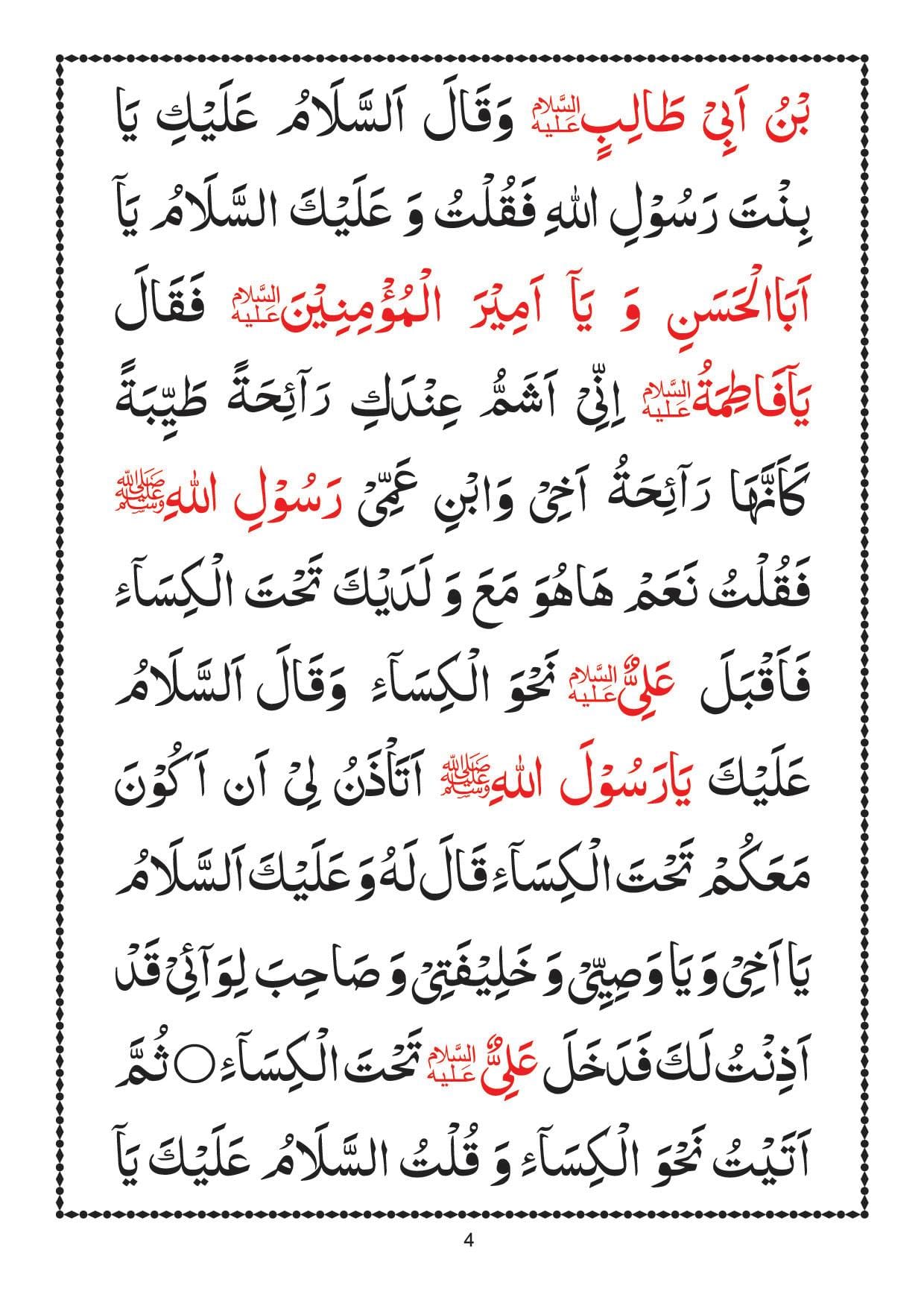
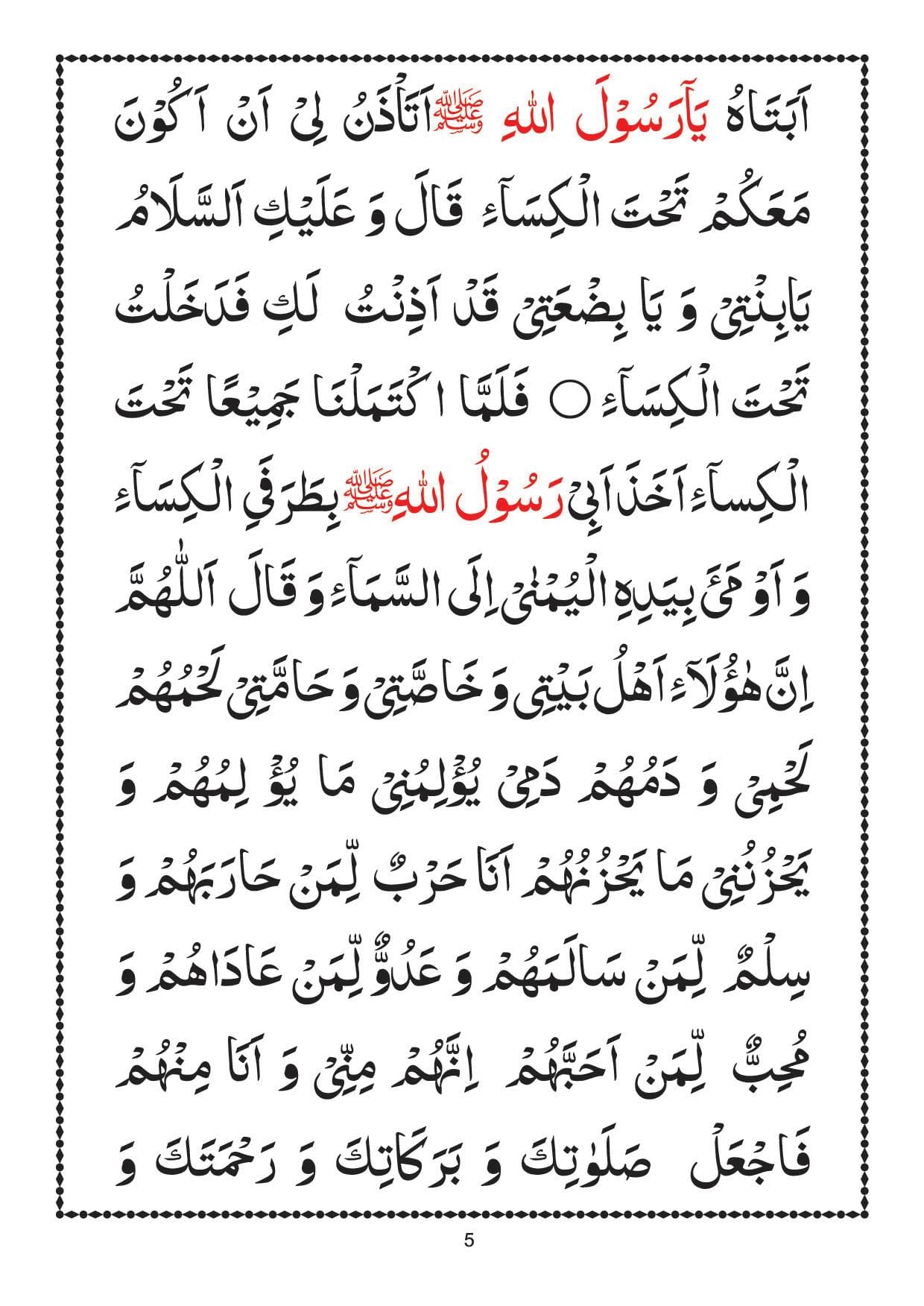
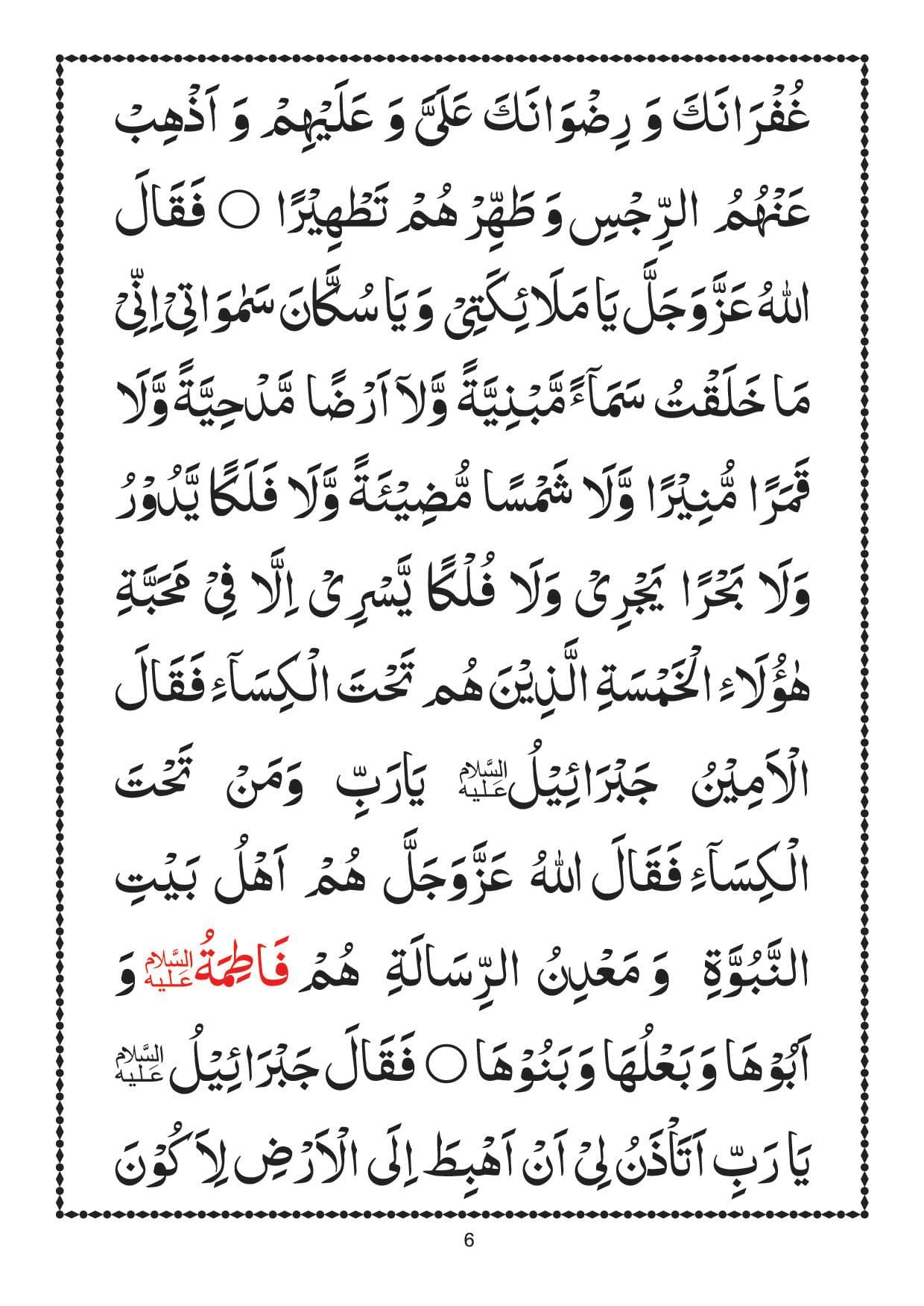
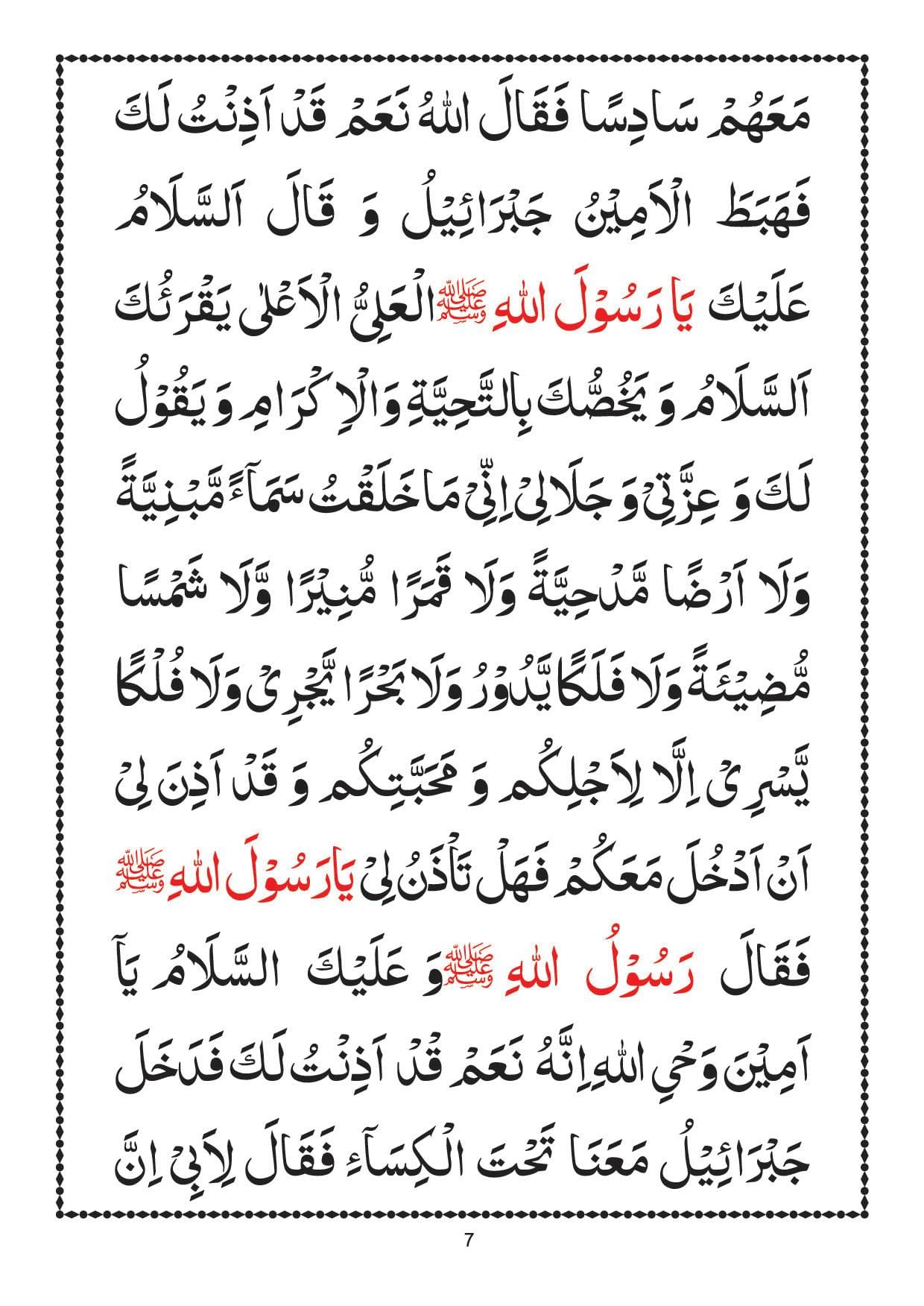
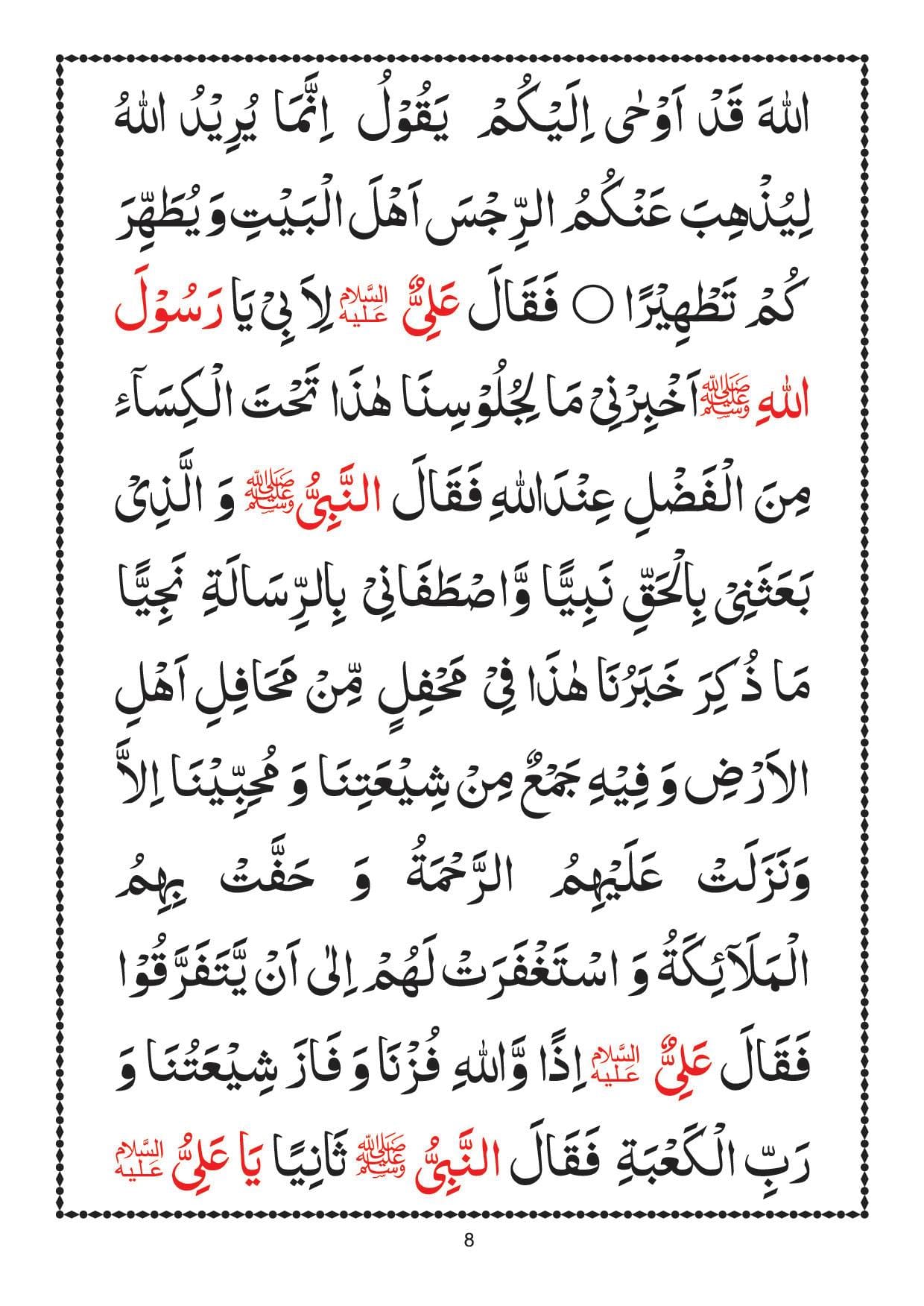
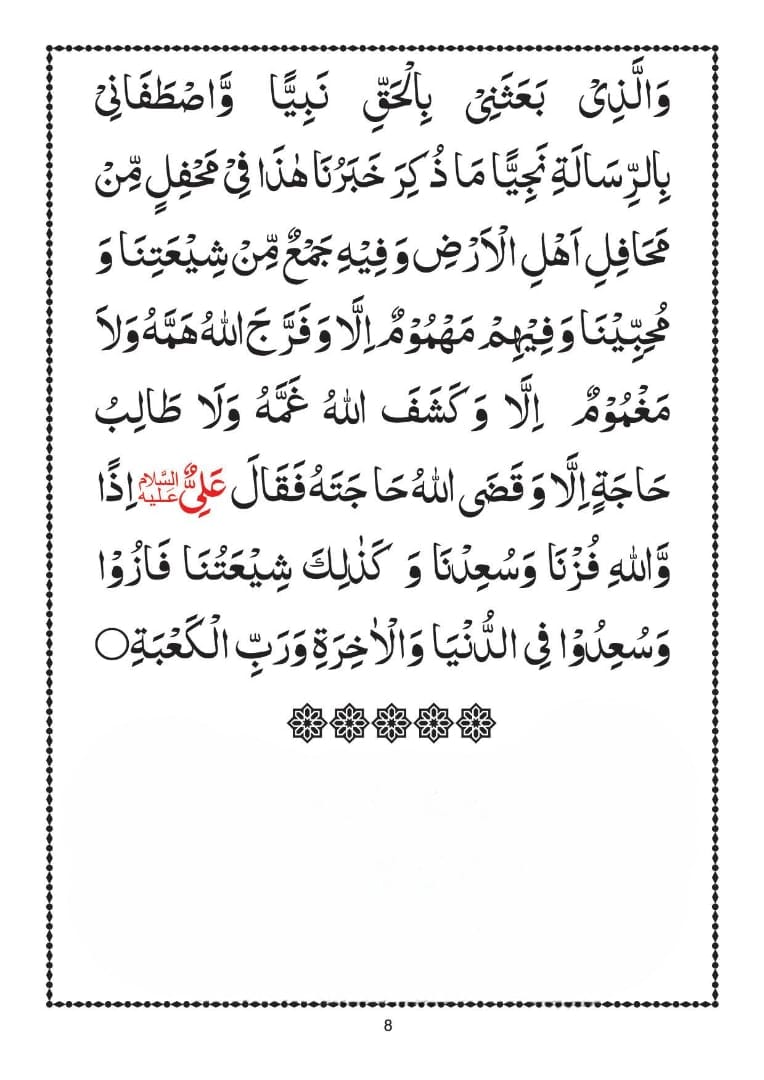
Hadith-e-Kisa occurred in the blessed home of Hazrat Fatimah al-Zahra (A.S). The Prophet Muhammad (PBUH) visited her house one day, exhausted, and requested his cloak (Kisa). Hazrat Fatimah (A.S) covered the Yemeni cloak over her father. Imam Hasan (A.S) soon arrived and, after greeting his mother, asked to be seated along with his grandfather under the cloak. Hazrat Fatimah (A.S) allowed him. Imam Husain (A.S) also arrived, and then Imam Ali (A.S), and Hazrat Fatimah (A.S) herself. The Prophet (PBUH) wrapped all of them in the cloak and then prayed with his hands raised: “O Allah! These are members of My Household. Their flesh is my flesh, their blood is my blood. Whoever injures them injures me, and whoever benefits them benefits me.”
At that sacred moment, Angel Jibreel (Gabriel) descended, carrying Allah’s revelation:
“O Muhammad! Allah greets you and says: ‘By My Glory and My Majesty, I have not created the heavens, the earth, the sun, or the moon but for the love of these five under the cloak.'”
This heavenly utterance made the event of Hadith-e-Kisa one of divine recognition and everlasting spiritual truth.
Summary of Hadith-e-Kisa (The Narration of the Cloak)
The Hadith-e-Kisa transforms into a remarkably personal and intimate experience between the Prophet and his Ahl al-Bayt.
It begins with the Prophet (PBUH) desiring comfort under his cloak and ends as divine revelation attesting to the matchless purity and love of the Ahl al-Bayt in the eyes of Allah (SWT).
Each of the five individuals — the Prophet Muhammad (PBUH), Imam Ali (A.S), Hazrat Fatimah (A.S), Imam Hasan (A.S), and Imam Husain (A.S) — embodies one of the most vital qualities of divine completeness: leadership, pity, purity, wisdom, and sacrifice.
This miracle highlights their closeness and shared purpose as embodiments of God’s mercy. The Hadith-e-Kisa thus stands as a living testament to Islam’s religious and moral nature — unity, purity, and submission to the will of Allah.
Hadith-e-Kisa and the Qur’anic Connection
Hadith-e-Kisa is soundly rooted in the Qur’an, in accordance with many verses that put emphasis upon the purity and excellence of the Ahl al-Bayt.
The Verse of Purification (33:33)
“Surely, Allah desires only to keep from you the impurities of your deeds and to complete His blessing upon you and upon the descendants of Abraham and to cleanse you of corruption.”
This verse was made known at the time of Hadith-e-Kisa, confirming divine election and purity.
The Verse of Mubahala (3:61)
“Come, let us call our sons and your sons, our women and your women, ourselves and yourselves…”
The Prophet (PBUH) also took the same five individuals — those of Hadith-e-Kisa — to the event of Mubahala, confirming their special status.
The Verse of Love (42:23)
“Say, I do not ask of you any reward except love for my near relatives.”
This directive of Allah confirms that love for the Ahl al-Bayt is not something anyone can refuse; it is an obligatory act of submission.
These verses collectively confirm that the Hadith-e-Kisa is not an independent narration but a fact accepted by God within the Qur’anic framework.
Theological Significance of Hadith-e-Kisa
Hadith-e-Kisa is of utmost importance in Shia theology as it marks the boundary of the meaning of the divine guide (Imamat) and infallibility of Ahl al-Bayt (A.S). It proves that the divine guide does not stop with Prophet Muhammad (PBUH) but goes on with his purified household.
In Islamic thought, the Hadith-e-Kisa proves:
- Tawheed (Oneness of God): The unity of divine mission exemplified through the pure household.
- Adl (Justice): The justice of Allah in appointing the purest hearts as His vicegerents.
- Nubuwwat (Prophethood): The Prophet as mediator between God’s revelation and humanity.
- Imamat (Leadership): The continuation of guidance by the Imams of the Ahl al-Bayt.
- Qiyamat (Accountability): The eternal reality that righteousness and purity will triumph.
Thus, the Hadith-e-Kisa is directly connected to the Usool-e-Deen — the foundational principles of religion — and confirms their divine origin.
Spiritual Teachings from Hadith-e-Kisa
Hadith-e-Kisa teaches Muslims timeless moral and spiritual lessons.
- Purity and Piety: In the same way, the Ahl al-Bayt are purified by Allah (SWT), and thus need to cleanse their hearts of pride, jealousy, and sin.
- Unity and Kinship: The huddling under a single cloak symbolizes love, mercy, and proximity among the believers.
- Divine Love as the Purpose of Creation: The narrative is a reminder to humanity that creation depends on love for Allah’s nearest to Him.
- Guidance through the Ahl al-Bayt: Implantation of faith occurs through their doctrine, ethics, and example.
- Veneration of Divine Chosen Ones: Respect for the Ahl al-Bayt is evidence of one’s sincerity in loving the Prophet (PBUH) and obeying Allah (SWT).
The Hadith-e-Kisa is thus always a source of inspiration for each new generation, promoting belief and moral consciousness.
Hadith-e-Kisa and Universal Relevance
While the Hadith-e-Kisa holds a special position of veneration in Shia Islam, its appeal transcends sectarian divisions. It invites all Muslims to reflect on purity, love, and affection for the Prophet’s family — values shared by all Islamic denominations.
It also sends a message to all humanity: that true honor lies not in power or riches, but in the purity of the heart and proximity to Allah (SWT). The cloak that united the Prophet’s family symbolizes spiritual cover — a refuge of love, guidance, and mercy from Allah for all believers.
“Conclusion: The Everlasting Message of Hadith-e-Kisa”
The Hadith-e-Kisa is not only a historical event but also a divine revelation declaring truth, love, and purity. It demonstrates how deep Allah (SWT) was in His association with His Prophet (PBUH) and the five purified souls behind the cloak.
By this sacred recitation, Muslims remember Islam’s spiritual legacy — Tawheed, justice, righteousness, and moral virtue. Hadith-e-Kisa still illuminates hearts, enveloping believers in the mantle of faith, mercy, and divine light.
For further study and primary sources, click here:
Al-Islam.org – Hadith-e-Kisa & Duas.org – The Story of the Cloak
Frequently Asked Questions (FAQs)
Q1. What is Hadith-e-Kisa?
It is the narrative of how the Prophet Muhammad (PBUH) and his members of the household — Imam Ali (A.S), Hazrat Fatimah (A.S), Imam Hasan (A.S), and Imam Husain (A.S) — cuddled up under a single cloak, leading to celestial revelation about their purity.
Q2. Why is Hadith-e-Kisa important?
Because it establishes the purity, authority, and religious status of the Ahl al-Bayt (A.S) and defines their divine mission to lead humanity.
Q3. What does Hadith-e-Kisa teach?
It is filled with love, purity, and unity under God’s direction — the key Islamic values.
Start Your Free Quran Class Trial Today!
Best Shia Islamic Teacher Based on Qualifications and Reliable Sources

Get Shia Teacher Online with a Clear Trial Booking Process

Shia Quran Teacher for Shia Muslims and a Family Learning Plan
Tasbih of Fatima Zahra: Order & Meaning (Shia Guide)
Fatimiyah 2026 Dates: First & Second Ayyam-e-Fatimiyah