
Dua e Ahad – Arabic, English Translation, Transliteration & Benefits
Dua e Ahad is a highly significant supplication in Shia Islam, recited to renew allegiance and commitment to Imam Muhammad al-Mahdi (عج), the Imam of our time. This dua is not only a prayer but a declaration of loyalty, readiness, and spiritual responsibility during the period of occultation (Ghaybah).
Shia Muslims recite this dua to strengthen their faith, maintain a living connection with the Imam (عج), and remind themselves of their duty to support justice and truth. In this complete guide, you will learn the meaning, importance, benefits, correct method of recitation, and you will also be able to download Dua e Ahad PDF in Arabic, English translation, and English transliteration.
Table of Contents
What Is Dua e Ahad?
The supplication of allegiance is a supplication narrated from the Ahlul Bayt (عليهم السلام) and is traditionally recited every morning. The word “Ahad” means promise or covenant. Through this dua, a believer renews their pledge to stand by Imam Mahdi (عج) with sincerity, obedience, and preparedness.
This supplication reflects a believer’s conscious awareness that the Imam of the time is alive, present, and divinely appointed, even though he remains in occultation.
Renewal of allegiance to Imam Mahdi (عج)
Expression of loyalty and readiness
Spiritual preparation for the Imam’s reappearance
Strengthening belief in divine leadership
Importance of This Dua in Shia Belief
In Shia theology, recognizing and remaining connected to the living Imam is an essential aspect of faith. This supplication plays a vital role in maintaining this bond during the time of occultation. It reminds believers that awaiting the Imam is not passive; it requires faith, moral discipline, and commitment.
Reciting it regularly keeps the concept of Imamat alive in daily life and strengthens the believer’s sense of responsibility toward Islam and humanity.
Reinforces belief in the Imam of the time
Renews daily allegiance (bay‘ah)
Builds patience and spiritual awareness
Keeps the believer aligned with justice and truth
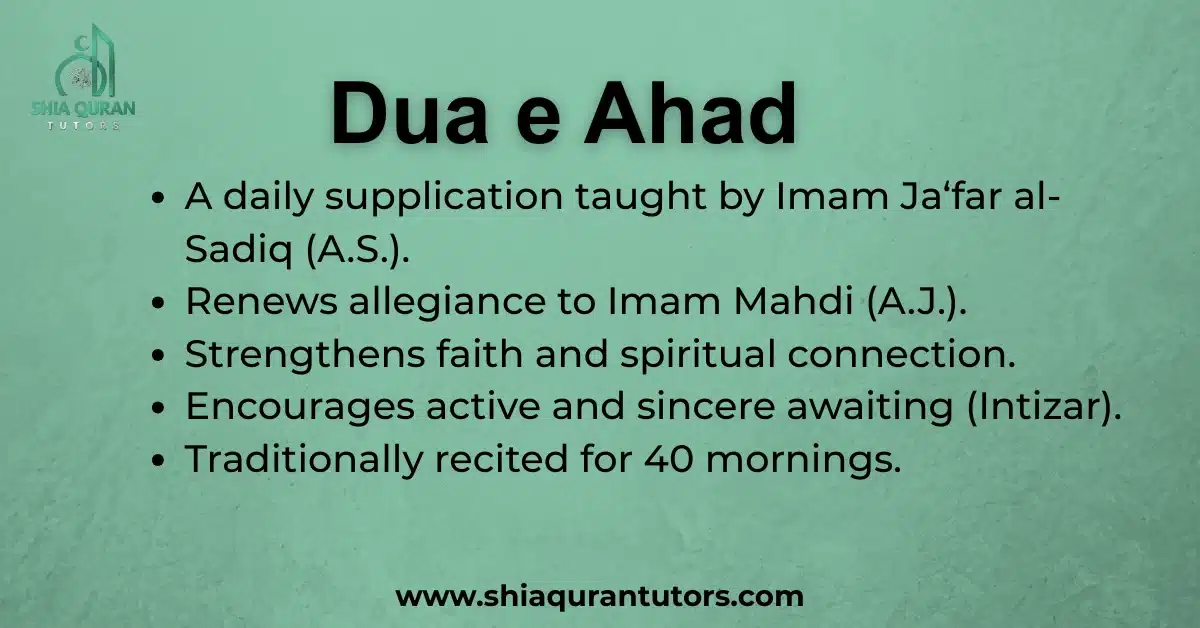
This supplication offers the following benefits:
Dua e Ahad carries profound spiritual benefits when recited with sincerity and consistency. Scholars emphasize that this supplication nurtures the heart, strengthens belief, and protects a person from spiritual negligence.
Strengthens faith and certainty (yaqeen)
Deepens love and connection with Imam Mahdi (عج)
Encourages spiritual discipline and consistency
Protects from deviation and misguidance
Brings reward for loyalty and remembrance
Creates readiness to assist the Imam when called
When and How to Recite Dua e Ahad
Best Time to Recite Dua e Ahad
Morning time is highly recommended
Preferably after Fajr prayer
Can be recited later if morning is missed
Recommended Method of Recitation
Make sincere intention (niyyah)
Sit calmly and attentively
Face the Qiblah if possible
Recite slowly with understanding
Reflect on the meaning of the words
Consistency is more important than speed. Even a short, thoughtful recitation brings spiritual benefit.
Reciting Dua e Ahad for 40 Days
Many Shia scholars recommend reciting Dua e Ahad for 40 consecutive mornings. This practice helps build spiritual discipline, strengthens loyalty to Imam Mahdi (عج), and increases awareness of one’s duties during the time of occultation.
Builds consistency in worship
Strengthens spiritual connection
Encourages self-reflection and readiness
Enhances sincerity and patience
Download Dua e Ahad PDF
For your convenience, Dua e Ahad is available in downloadable PDF format. These PDFs are ideal for daily recitation, learning, teaching children, and sharing with others.
Connection of This Supplication With Imam Mahdi (عج)
This supplication reflects a deep and personal relationship between a believer and the Imam of the time. It is not limited to words; rather, it expresses loyalty, readiness, and a conscious commitment to stand with truth and justice. Through regular recitation, a believer renews awareness that the Imam (عج) is alive, present by divine will, and aware of the condition of his followers.
This connection nurtures hope, patience, and responsibility. It reminds believers that spiritual growth, moral conduct, and social justice are all part of preparing oneself to be among those who support the Imam when he reappears.
Awaiting the Imam Is Not a Passive State
Awaiting the reappearance of the Imam is an active and conscious process. It requires self-improvement, moral discipline, and commitment to Islamic values in daily life. True awaiting means aligning one’s actions with justice, honesty, and compassion rather than merely expressing verbal hope.
Practicing truthfulness and integrity
Avoiding oppression and injustice
Strengthening faith through consistent worship
Serving humanity with sincerity
A believer who truly awaits the Imam strives to reflect these values in personal, social, and spiritual conduct.
Common Mistakes While Reciting Supplications
Many people recite supplications regularly but fail to gain their full spiritual benefit due to certain common mistakes. Awareness of these mistakes helps improve sincerity and effectiveness in worship.
Reciting in haste without reflection
Treating the prayer as a routine habit only
Lack of understanding of the meaning
Inconsistency in daily recitation
Absence of sincere intention (niyyah)
Correcting these habits can significantly deepen spiritual impact and personal connection.
Teaching This Supplication to Children
Introducing children to this supplication at an early age helps build love for the Ahlul Bayt and strengthens their spiritual foundation. Teaching should be gentle, age-appropriate, and focused on meaning rather than memorization alone.
Use simple explanations and short sessions
Encourage consistency over perfection
Read together as a family
Use transliteration PDFs for easy pronunciation
This approach nurtures faith naturally and instills long-term spiritual discipline.
Why Consistency Matters More Than Quantity
In spiritual practice, consistency holds greater value than length or speed. Even a brief, sincere daily recitation can have a stronger effect than lengthy recitation performed irregularly. Regular engagement develops discipline, mindfulness, and deeper understanding over time.
This principle encourages believers to maintain steady worship, ensuring that spiritual growth remains continuous and meaningful.
Frequently Asked Questions About Dua e Ahad
What is Dua e Ahad?
Can Dua e Ahad be recited daily?
What are the benefits of Dua e Ahad?
Is Dua e Ahad only for Shia Muslims?
When is the best time to recite Dua e Ahad?
How many days should Dua e Ahad be recited?
Where can I download Dua e Ahad PDF?
Conclusion
Dua e Ahad is a powerful daily reminder of a believer’s responsibility toward Imam Mahdi (عج). Through sincere recitation, reflection, and consistency, this supplication strengthens faith, renews loyalty, and prepares the heart for the Imam’s reappearance. Making Dua e Ahad part of daily life is a meaningful step toward spiritual growth and true awaiting.
If you would like your child to begin learning the Quran in a structured, respectful, and child-friendly environment, we offer a free 3-day demo class with experienced Shia Quran teachers. This allows parents to understand our teaching method and assess comfort before regular classes begin.
To get started or ask any questions, please visit our Contact Us page and our team will guide you further.