
Arbaeen 2026 Date: 20 Safar, Ziyarat and Complete Guide
The Arbaeen 2026 date is expected to fall on either Monday, 3 August or Tuesday, 4 August 2026, corresponding to 20 Safar 1448 AH. The exact date may differ between countries because the beginning of each Islamic month is determined according to regional moon sighting and the religious authority followed by each community.
In Pakistan, Chehlum 2026 is currently expected on Tuesday, 4 August 2026. However, this date should not be described as officially confirmed until the beginning of Safar 1448 is established by the relevant moon-sighting authorities.
Arbaeen, also called Chehlum in Pakistan, India and other parts of South Asia, marks the fortieth-day commemoration associated with the martyrdom of Imam Hussain ibn Ali (A.S.) and his loyal companions at Karbala. It is observed through mourning, Ziyarat, religious learning, reflection, charity and service to others.
Quick Answer
Arbaeen 2026 is expected on 3 or 4 August 2026, corresponding to 20 Safar 1448 AH. Pakistan and much of South Asia are presently expected to observe Chehlum on Tuesday, 4 August, while some international calendar calculations place 20 Safar on Monday, 3 August. The final date may vary by one day according to regional moon sighting, so local Shia religious announcements should be followed.
Table of Contents
Date Accuracy and Moon-Sighting Note
The dates presented in this guide are calculated expectations rather than final religious confirmations.
Islamic dates begin at sunset. Therefore, if a community confirms Tuesday, 4 August as 20 Safar, the religious night of Arbaeen will begin at sunset on Monday, 3 August.
The beginning of Safar can differ between countries because communities may follow:
- Local naked-eye moon sighting
- Moon sighting within a shared horizon
- The ruling of a particular marja
- A recognised regional Shia moon-sighting organisation
- An official national Islamic calendar
Families, Islamic centres and travellers should follow the announcement of the marja they emulate or the trusted Shia authority used by their community.
Shia Quran Tutors should update this article immediately after reliable Safar 1448 announcements become available.
When Is Arbaeen 2026?
Arbaeen 2026 is expected to fall within the regional window of 3–4 August 2026.
Arbaeen is observed on 20 Safar, the twentieth day of the second month of the Islamic lunar calendar. Because the Islamic year is approximately 10 or 11 days shorter than the Gregorian year, the Gregorian date of Arbaeen moves earlier each year.
Current calendar calculations are not completely uniform:
- Some calculated calendars place 1 Safar 1448 on 15 July 2026, making 20 Safar fall on 3 August.
- Other calendars place 1 Safar on 16 July, making 20 Safar fall on 4 August.
- The religiously observed date in each community will depend on the Safar moon-sighting announcement it follows.
MAM-US officially established Tuesday, 16 June 2026 as 1 Muharram 1448 for North America. A separate announcement concerning the Safar crescent will be required before the final Arbaeen date can be confirmed for communities following its methodology.
Readers may also consult the following related Shia Quran Tutors guides:
Expected Arbaeen 2026 Date by Countries
The following table is provided for advance planning. It should not replace the official moon-sighting announcement followed by the reader’s community.
| Country or Region | Expected Arbaeen 2026 Date | Islamic Date | Confirmation to Follow |
|---|---|---|---|
| Iraq | 3–4 August 2026 | 20 Safar 1448 AH | Recognised Shia authorities, shrine administrations and local announcements |
| Iran | 4 August 2026 expected | 20 Safar 1448 AH | Official religious calendar and relevant Shia authorities |
| Pakistan | 4 August 2026 expected | 20 Safar 1448 AH | Official and trusted Shia Safar moon-sighting announcements |
| India | 4 August 2026 expected | 20 Safar 1448 AH | Regional Shia scholars, organisations and local moon sighting |
| United States | 3–4 August 2026 | 20 Safar 1448 AH | IMAM-US or the religious authority followed by the local community |
| Canada | 3–4 August 2026 | 20 Safar 1448 AH | Trusted Shia centres and the moon-sighting standard they follow |
| United Kingdom | 3–4 August 2026 | 20 Safar 1448 AH | Local Shia centres and the office of the followed marja |
| Australia and New Zealand | 3–4 August 2026 | 20 Safar 1448 AH | Regional Shia organisations and local Islamic centres |
| Gulf Countries | 3–4 August 2026 | 20 Safar 1448 AH | Local religious authorities and community announcements |
| Continental Europe | 3–4 August 2026 | 20 Safar 1448 AH | National or local Shia centres and marja-based guidance |
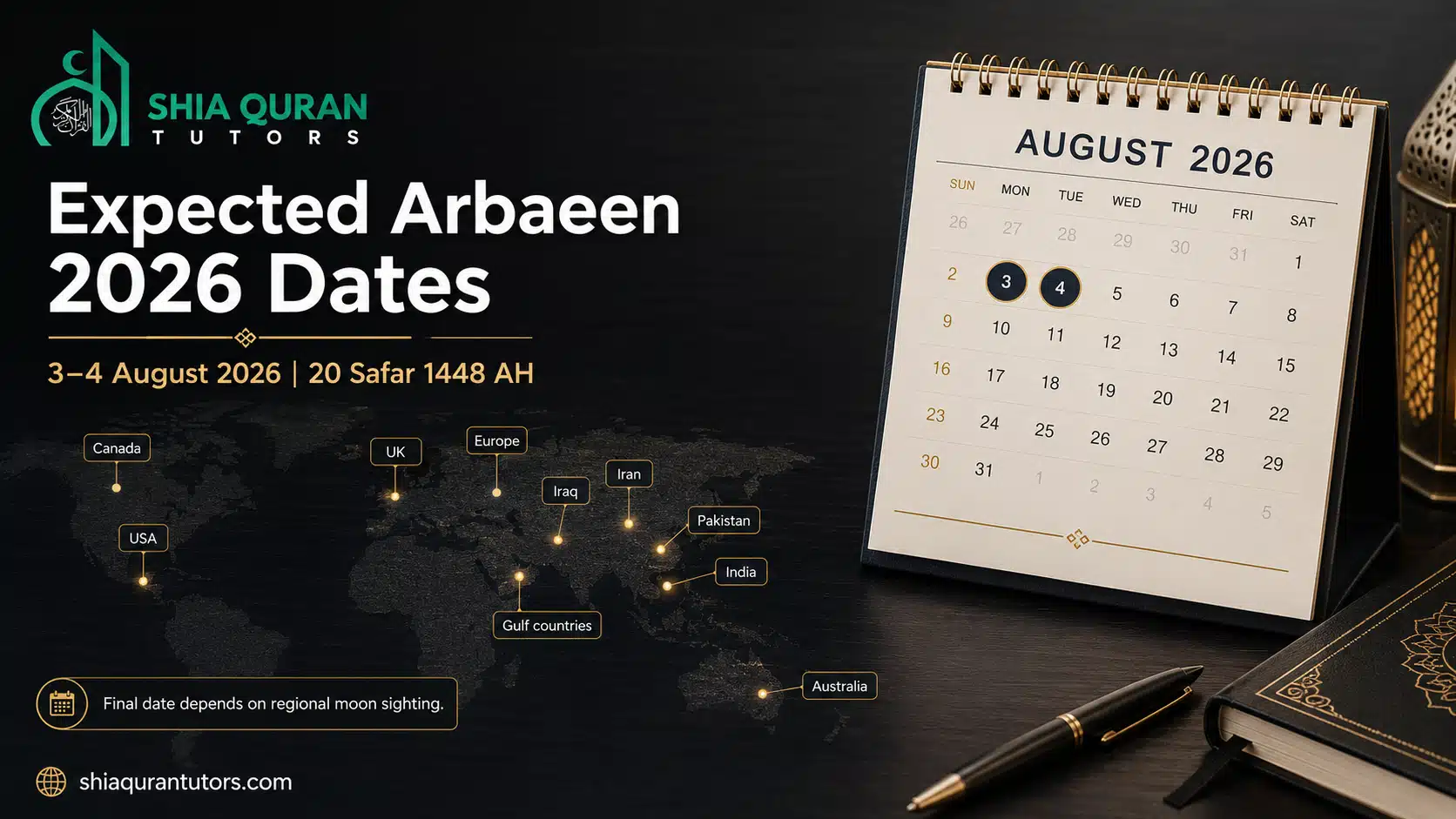
People searching for the Chehlum 2026 date, Imam Hussain Chehlum date or 20 Safar 1448 date are generally searching for the same commemoration.
“Arbaeen” comes from Arabic, while “Chehlum” is a Persian- and Urdu-based term commonly used throughout South Asia. Both refer to the fortieth-day commemoration observed on 20 Safar.
What Does Arbaeen Mean?
The Arabic word “Arbaeen” means “forty.”
In this religious context, Arbaeen refers to the fortieth-day commemoration associated with the martyrdom of Imam Hussain ibn Ali (A.S.), members of his family and his loyal companions at Karbala.
The word “Chehlum” also refers to the fortieth day and is commonly used in Pakistan, India and other South Asian communities.
Arbaeen is observed on 20 Safar, following Ashura on 10 Muharram. Ashura marks the day on which Imam Hussain (A.S.) and his companions were martyred at Karbala in 61 AH.
For Shia Muslims, Arbaeen is not merely a numerical anniversary. It is a continuation of the message of Ashura.
It preserves the memory of Imam Hussain’s refusal to surrender Islamic principles, justice and human dignity to an authority he regarded as corrupt and illegitimate.
Arbaeen therefore joins mourning with moral responsibility. Remembering Imam Hussain should encourage believers to become more truthful, prayerful, courageous, compassionate and willing to serve others.
Why Is Arbaeen Observed After Forty Days?
Arbaeen is observed on 20 Safar as the recognised fortieth-day commemoration connected with the martyrdom of Imam Hussain (A.S.) on 10 Muharram.
A well-known narration attributed to Imam Hasan al-Askari (A.S.) lists Ziyarat Arbaeen among five signs of a believer. The report is preserved in recognised Shia devotional and scholarly literature.
The five signs described in the narration are commonly presented as:
- Performing 51 units of prayer each day, including obligatory and recommended prayers
- Reciting Ziyarat Arbaeen
- Wearing a ring on the right hand
- Placing the forehead on the earth during prostration
- Reciting Bismillah aloud in the prayers where it is recited
The report should be presented with attribution rather than as an unattributed universal statement, since hadith reports are studied through their sources, chains and scholarly interpretations.
Ziyarat Arbaeen is also reported from Imam Ja’far al-Sadiq (A.S.) through his companion Safwan al-Jammal. The narration permits its recitation in Karbala and from home when a believer cannot be physically present at the shrine.
The special significance of Arbaeen concerns Imam Hussain and the established Shia devotional practice of 20 Safar. It should not automatically be used to claim that every death in Islamic history has a religiously prescribed forty-day commemoration.
The Relationship Between Arbaeen, Imam Hussain and Karbala
Imam Hussain ibn Ali (A.S.) was the grandson of Prophet Muhammad (PBUH), the son of Imam Ali (A.S.) and Lady Fatimah al-Zahra (S.A.), and the third Imam in Twelver Shia Islam.
In 61 AH, Imam Hussain refused to give allegiance to Yazid ibn Muawiyah. Shia historical and religious sources explain that Imam Hussain considered such allegiance inconsistent with the protection of Islamic values, moral responsibility and justice.
Imam Hussain travelled towards Iraq with members of his family and a small group of supporters. They were stopped at Karbala and surrounded by a significantly larger force.
Access to water was restricted, and on 10 Muharram Imam Hussain, members of Banu Hashim and his loyal companions were martyred.
The surviving women and children were taken captive. Imam Ali ibn al-Hussain, known as Imam Zayn al-Abidin or Imam Sajjad (A.S.), survived the events of Ashura while seriously ill.
Ashura commemorates the day of martyrdom. Arbaeen marks forty days of remembrance and the continuation of the message after the battle.
Lady Zaynab bint Ali (S.A.) and Imam Sajjad (A.S.) played a central role in preserving the testimony of Karbala. Their patience, speeches and courage ensured that the victims were not forgotten and that the tragedy was not presented only through the account of the ruling authorities.
Arbaeen reminds believers that the mission of Karbala did not end when the battlefield became silent. It continued through testimony, worship, education, mourning and the preservation of historical memory.
What Happened on the First Arbaeen?
Several events are associated with the first Arbaeen, but the historical evidence for each claim is not equally conclusive.
A responsible Shia article should distinguish established devotional practices from historical reports that remain debated among scholars.
The Visit of Jabir ibn Abdullah al-Ansari
Jabir ibn Abdullah al-Ansari is widely identified in Shia tradition as the first prominent visitor to the grave of Imam Hussain (A.S.) on Arbaeen.
Traditional reports state that Jabir travelled to Karbala with Atiyyah al-Awfi. Jabir was elderly and is reported to have performed ghusl, applied fragrance, approached the grave and offered salutations to Imam Hussain.
Al-Islam.org’s Arbaeen study records the report of Jabir’s visit and identifies Atiyyah as his companion.
The visit occupies an important place in Shia devotional history. However, the exact wording and detailed circumstances should be attributed to their historical sources rather than presented as independently verified modern evidence.
Did the Captives Return to Karbala on 20 Safar?
Some traditional Shia accounts state that the surviving family of Imam Hussain returned to Karbala while travelling from Damascus towards Madinah.
According to this account, they arrived on 20 Safar and met Jabir ibn Abdullah al-Ansari.
Other respected Shia historians have questioned whether the captives could have travelled from Karbala to Kufa, then to Damascus and back to Karbala within forty days.
Shaykh Ibrahim Ayati, for example, discusses the limitations of the available chronology and questions whether the return can confidently be placed on the first Arbaeen.
The most accurate conclusion is:
The return of the captives to Karbala is an important traditional report, but whether it occurred specifically on 20 Safar 61 AH remains a subject of scholarly discussion.
This disagreement does not reduce the established devotional importance of 20 Safar or the practice of Ziyarat Arbaeen.
Was Imam Hussain’s Sacred Head Returned on 20 Safar?
Some historical works state that the sacred head of Imam Hussain was returned to Karbala and reunited with his body on 20 Safar.
Other accounts differ regarding the location, date and circumstances of the burial.
The matter should therefore be described as a reported historical position rather than an undisputed fact accepted uniformly by all historians.
Historical Claims About the First Arbaeen
| Historical or Religious Claim | Accurate Way to Present It |
|---|---|
| Arbaeen is observed on 20 Safar | Established in Shia devotional practice and religious tradition |
| Ziyarat Arbaeen is reported from Imam Ja’far al-Sadiq | Reported through Safwan al-Jammal in recognised Shia devotional sources |
| Jabir ibn Abdullah visited Imam Hussain on Arbaeen | A widely reported tradition in Shia historical and devotional literature |
| The captives returned to Karbala on 20 Safar 61 AH | Accepted in some traditional accounts but questioned by other respected Shia historians |
| Imam Hussain’s sacred head was returned on 20 Safar | Reported by some sources, while other historical accounts differ |
Learn About Karbala With Understanding
Children and adults should learn about Karbala through reliable sources, age-appropriate teaching and respectful discussion.
Shia Quran Tutors offers structured one-to-one lessons through its Online Aqaid Course and Fiqh of Ahlul Bayt Course.
These internal pages are live and currently accessible on ShiaQuranTutors.com.
Families may request a free trial to discuss the student’s age, existing knowledge and educational goals before beginning regular lessons.
What Is Ziyarat Arbaeen?
Ziyarat Arbaeen is a devotional salutation addressed to Imam Hussain (A.S.) and recited especially on 20 Safar.
The Ziyarat is reported from Imam Ja’far al-Sadiq (A.S.) through his companion Safwan al-Jammal. It appears in recognised Shia devotional literature and is included in widely used collections such as Mafatih al-Jinan.
The text sends peace upon Imam Hussain, bears witness to his sacrifice and expresses loyalty to the principles for which he stood.
One of its central themes is that Imam Hussain sacrificed himself to help rescue people from ignorance, confusion and moral misguidance.
This statement should be understood as a theological and ethical message within Shia devotional tradition. It should never be used as permission to insult other Muslims or encourage sectarian hostility.
Ziyarat Arbaeen invites believers to examine whether their own conduct reflects the values they associate with Imam Hussain.
Loyalty to Imam Hussain should appear through:
- Honesty
- Worship
- Justice
- Patience
- Compassion
- Moral courage
- Service to others
- Respect for human dignity
Students who want to understand recognised Shia supplications and ziyarat texts may explore the Ziyarat and Duas Course.
Can Ziyarat Arbaeen Be Recited at Home?
Yes. A person who cannot travel to Karbala may recite Ziyarat Arbaeen at home, in an imambargah or at a local Islamic centre.
The reported instruction concerning Ziyarat Arbaeen includes its recitation from home for believers who cannot be present in Karbala.
A person observing Arbaeen from home may:
- Recite Ziyarat Arbaeen from a verified source
- Attend or organise a majlis
- Recite the Quran
- Give charity
- Provide food or water
- Pray for pilgrims and oppressed people
- Read about Imam Hussain and Karbala
- Teach children age-appropriate lessons
- Perform a private act of service
Visiting Karbala has a unique place in Shia devotion, but sincere remembrance is not restricted to those who are physically present at the shrine.
How Do Shia Muslims Observe Arbaeen?
Arbaeen practices differ according to country, culture and community. The central purposes are mourning, worship, learning, loyalty to Ahlul Bayt and service to humanity
Reciting Ziyarat Arbaeen
Many believers recite Ziyarat Arbaeen individually, with family members or during a congregational gathering.
The Arabic text should be taken from a properly proofread, recognised Shia source. Readers who do not understand Arabic may also study a reliable translation.
Attending Majalis
Majalis may include Quran recitation, lectures, marsiya, noha, elegies and discussions about Imam Hussain’s stand.
Speakers should clearly distinguish:
- Confirmed historical information
- Reported narrations
- Scholarly interpretation
- Popular accounts that lack strong documentation
Mourning Processions
Communities may organise processions to remember Imam Hussain and the martyrs of Karbala.
Participants should observe local law, traffic arrangements, public-safety guidance and respect for neighbours and other members of society.
Charity and Community Service
Food, drinking water, transport, first aid and financial assistance are commonly provided during Arbaeen.
Service should be carried out sincerely and without humiliating recipients. Food preparation and distribution should follow appropriate hygiene and safety standards.
Quran Recitation and Dua
Families may recite the Quran, offer duas and dedicate the reward to Imam Hussain and the martyrs of Karbala.
Studying the Message of Karbala
Arbaeen should include learning as well as emotion.
Believers may study:
- The goals of Imam Hussain
- The role of Lady Zaynab
- The patience of Imam Sajjad
- The loyalty of the companions
- The preservation of truth after Karbala
- The relationship between worship and moral courage
Arbaeen 2026 in the United States
Arbaeen 2026 in the USA is expected on 3 or 4 August, subject to the confirmed beginning of Safar.
IMAM-US established Tuesday, 16 June 2026 as 1 Muharram 1448 for North America. Its Safar announcement will determine the final date for communities following its moon-sighting methodology.
The United States covers multiple time zones, and Shia centres may follow different maraji or moon-sighting standards. Programmes may therefore be held on different evenings.
Families seeking personalised religious learning can visit Online Shia Quran Classes in USA.
Arbaeen 2026 in the United Kingdom
Arbaeen 2026 in the UK is expected within the 3–4 August regional window.
British Shia centres may follow local crescent visibility, the announcement of a particular marja or an international religious authority.
Parents should verify both the recognised religious date and the programme schedule, especially where the main gathering is moved to the nearest convenient evening.
Families may learn more about one-to-one classes through Online Shia Quran Teacher in UK
Arbaeen 2026 in Canada
Arbaeen 2026 in Canada is expected on 3 or 4 August.
Communities in Ontario, Quebec, Alberta, British Columbia and other provinces may not all use the same moon-sighting criteria.
Some centres follow North American Shia announcements, while others follow the ruling of a particular marja or an overseas religious authority.
Families should follow the announcement of the centre where they intend to attend the Arbaeen programme.
Simple Arbaeen Activities for Children
Parents and teachers may use the following activities:
- Read an age-appropriate account of Karbala.
- Ask children to write three lessons learned from Imam Hussain.
- Create a Karbala Values chart containing truth, prayer, courage, patience and service.
- Prepare food or drinking water for a small charity project.
- Study the meanings of selected passages from Ziyarat Arbaeen.
- Donate to a verified humanitarian organisation.
- Discuss how to respond peacefully to bullying or injustice.
- Encourage each child to perform one private act of kindness.
- Ask children to write a short reflection about Lady Zaynab’s courage.
- Help children understand why historical claims should be verified.
These activities should remain sincere and educational rather than becoming competitive social-media displays.
Frequently Asked Questions About Arbaeen 2026
When is Arbaeen 2026?
What is the expected 20 Safar 1448 date?
What is the Chehlum 2026 date in Pakistan?
Is Arbaeen always observed forty days after Ashura?
What is Ziyarat Arbaeen?
Can Ziyarat Arbaeen be recited at home?
Did the family of Imam Hussain return to Karbala on the first Arbaeen?
What should children learn from Arbaeen?
Conclusion
The Arbaeen 2026 date is expected within the regional window of 3–4 August 2026, corresponding to 20 Safar 1448 AH.
Pakistan is currently expected to observe Chehlum on Tuesday, 4 August, while some international calendar calculations place Arbaeen on Monday, 3 August. Both dates must remain labelled “expected” until the beginning of Safar is confirmed.
Arbaeen connects the grief of Ashura with moral responsibility. It encourages believers to remember Imam Hussain through worship, knowledge, service, truthfulness and courage.
Whether a person walks from Najaf to Karbala, attends a local majlis or recites Ziyarat Arbaeen at home, the purpose should be to understand Imam Hussain’s stand and apply its values to everyday life.
Shia Quran Tutors provides one-to-one online Quran and Islamic Studies classes for children and adults. Students can study Quran recitation, Tajweed, Aqaid, Fiqh of Ahlul Bayt, Islamic history, duas and ziyarat with individual guidance.
To discuss a suitable learning plan or request a free trial, visit the Shia Quran Tutors Contact Page.
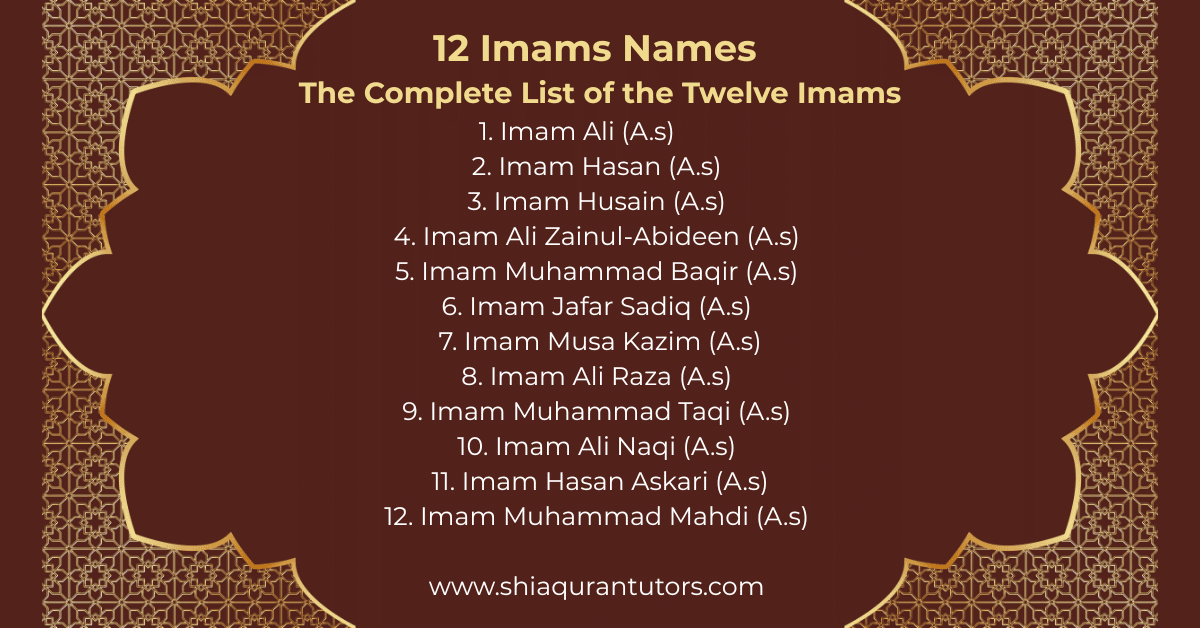
In Islam, there was no end to the guidance after the Holy Prophet Muhammad ﷺ.
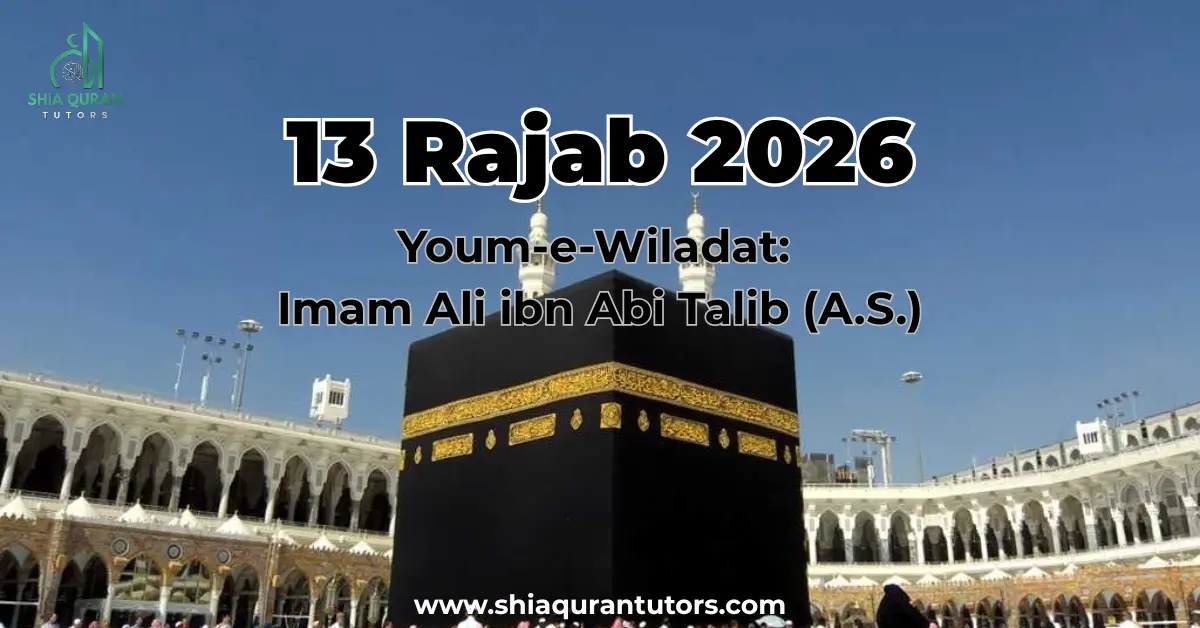
If you are wondering when is 13 Rajab 2026, the date is expected to fall on january 1st or 2nd, 2026. In Southeast Asia, the 13 Rajab 2026 date in Pakistan is likely to be january 2nd, depending on the moon sighting.
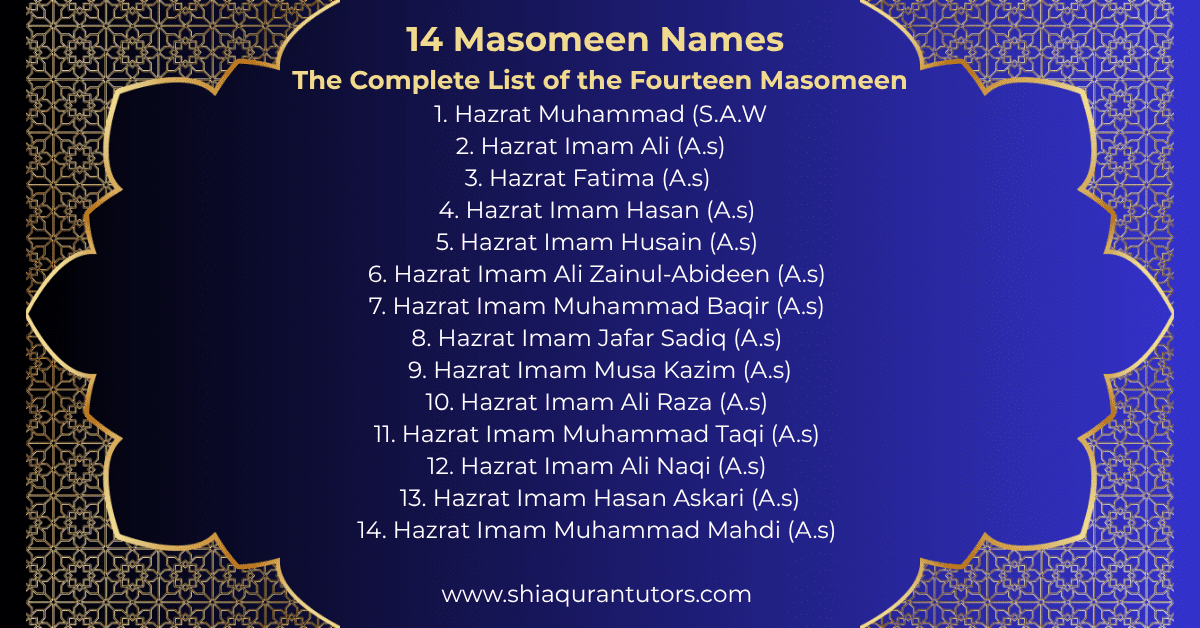
The 14 Masoomeen are the most revered personalities in Islam: Prophet Muhammad (PBUH), Lady Fatima (sa), Imam Ali (as), Imam Hasan (as), Imam Husayn (as), Imam Zain-ul-Abideen (as), Imam Baqir (as), Imam Jafar Sadiq (as), Imam Musa Kazim (as), Imam Reza (as), Imam Taqi (as), Imam Naqi (as), Imam Askari (as), and Imam Mahdi (ajtf).