
Day of Arafah 2026: Essential Guide to the Most Blessed Day
The Islamic lunar calendar contains specific milestones that offer profound opportunities for spiritual renewal. As an educational strategist, I design comprehensive learning curricula for global students. I continuously observe how structural preparation changes a student’s relationship with sacred time. The ninth day of the final Islamic month is not merely a historical date. It represents the pinnacle of spiritual clarity, divine forgiveness, and communal unity.
Whether you are preparing to stand on the plains of Arafah during the annual pilgrimage or planning your acts of devotion from home, tracking this day requires precision. In my professional capacity developing curriculum assets at Shia Quran Tutors, we emphasize that understanding the internal theology of Islamic rituals transforms routine actions into deeply meaningful experiences. This definitive guide delivers the chronological, jurisprudential, and practical insights you need to maximize this unmatched spiritual event.
What is the Day of ‘Arafah?
To comprehend the magnitude of this occasion, we must first address the foundational question: What is the Day of ‘Arafah?
The Day of ‘Arafah marks the ninth day of Dhul Hijjah, the twelfth month of the Islamic calendar. Linguistically, the Arabic root word arafa signifies “to know,” “to recognize,” or “to realize.” This linguistic root mirrors the historical and spiritual events tied to the geographical location of Mount Arafah and its surrounding plains, located roughly twenty kilometers southeast of Makkah.
Islamic historical traditions state that the plain of Arafah is the earthly site where Prophet Adam and Hawwa (Eve) reunited after their descent to Earth. On this plain, they recognized each other and sought divine forgiveness. Furthermore, during his final pilgrimage, Prophet Muhammad delivered his historic Farewell Sermon (Khutbah al-Wada) on Mount Arafah. In this sermon, he established universal principles of human rights, racial equality, and social justice.
From a scriptural perspective, scholars view this day as the temporal space where the Islamic faith attained structural perfection. During the afternoon of this specific day, Allah revealed the famous third verse of Surah al-Ma’idah to the Prophet:
“This day I have perfected for you your religion and completed My favor upon you and have approved for you Islam as religion.” (Quran 5:3)
For millions of believers worldwide, this day serves as a annual reminder of that divine perfection, offering a pathway to cleanse past transgressions through sincere repentance.
When is the Day of ‘Arafah 2026?
Determining the exact date of Islamic holidays requires careful tracking of lunar cycles. Because the Islamic Hijri calendar relies entirely on the phases of the moon, its year is approximately ten to eleven days shorter than the solar Gregorian calendar. Consequently, sacred days rotate through the seasonal cycles over a thirty-three-year period.
Expected Chronology for the Current Hijri Year
For the current Islamic year of 1447 AH, astronomical calculations provide a reliable window for global planning. The month of Dhul Hijjah 2026 is projected to begin on the evening of May 17, 2026, with the first official day of the month corresponding to Monday, May 18, 2026.
Based on these parameters, the When is the Day of ‘Arafah 2026? query settles on a specific timeline. The Day of Arafah 2026 date is expected to fall on Tuesday, May 26, 2026.
Projected Lunar Calendar for Hajj 2026
| Islamic Date | Expected Gregorian Date | Spiritual Milestone |
| 1st Dhul Hijjah | Monday, May 18, 2026 | Holy Month Begins |
| 8th Dhul Hijjah | Monday, May 25, 2026 | Yawm at-Tarwiyah (Day of Rehydration) |
| 9th Dhul Hijjah | Tuesday, May 26, 2026 | Day of Arafah 2026 |
| 10th Dhul Hijjah | Wednesday, May 27, 2026 | Eid al-Adha 2026 (Festival of Sacrifice) |
The Sighting Methodology Challenge
In my years managing digital educational platforms, I regularly encounter communities confused by split regional calendars. The final determination of the Day of Arafah 2026 rests on actual optical crescent moon sightings at the end of the preceding month, Dhul Qa’dah.
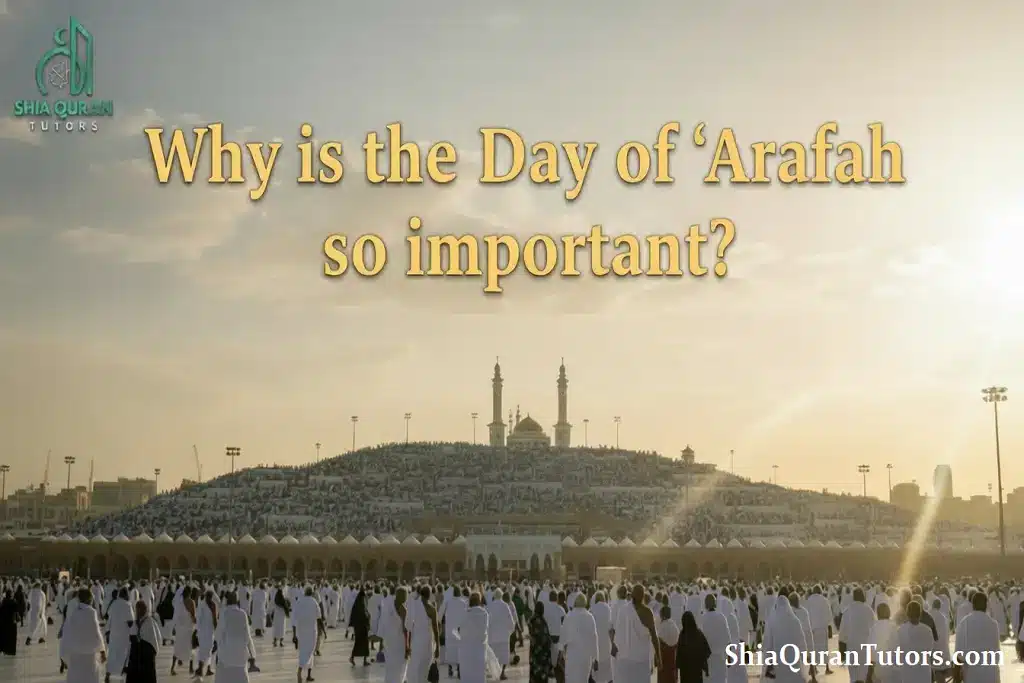
Why is the Day of ‘Arafah so important?
Understanding Why is the Day of ‘Arafah so important? requires an examination of the unique spiritual benefits assigned to this day. Islamic texts portray this specific day as a window of intense mercy, where the barrier between the human supplicant and divine acceptance becomes remarkably thin.
1. The Day of the Primordial Covenant
Theology teaches that the plain of Arafah is where Allah gathered the souls of all humanity before creation. In this primordial state, He extracted the foundational covenant (Mithaq), asking: “Am I not your Lord?” to which every soul replied, “Yes, we testify.” Returning to this theme on this day allows believers to consciously renew that original spiritual promise.
2. Maximum Liberation from Hellfire
Traditional texts indicate that no other day witnesses more individual souls granted safety from divine punishment than this day. Scholars emphasize that this promise extends to both the physical pilgrims standing on the mountain and the sincere believers praying across the globe.
3. The Humiliation of Satan
Because divine forgiveness descends in vast quantities on this day, theological narrations explain that Satan is never seen more frustrated, diminished, or humiliated than during these specific hours. The sheer volume of answered prayers effectively dismantles his long-term efforts to lead believers astray.
Hadith regarding the Day of ‘Arafah
To build a reliable framework for our practice, we must examine the specific textual evidence found in classic compilations. Reviewing an authentic Hadith regarding the Day of ‘Arafah provides clear clarity on the exact value of this day.
Prophet Narrations on Fasting and Forgiveness
In a highly cited narration recorded in Sahih Muslim, the Prophet was questioned about the spiritual return of voluntary fasting on this specific date. He responded directly:
“It expiates the sins of the past year and the coming year.”
This unique benefit—clearing two full years of transgressions through a single day of self-restraint—is exclusive to this date. It highlights the immense generosity of the Creator.
The Essence of the Pilgrimage
In another foundational tradition found in the Sunan collections, the Prophet summarized the entire multi-day pilgrimage into a single definitive phrase:
“Hajj is Arafah.”
This legal declaration means that if a pilgrim misses the structural presence on the plains of Arafah during the designated hours, their entire Hajj is legally invalid. They cannot compensate for this loss with animal sacrifices or extra rituals. This reality underscores why the Day of Arafah 2026 demands meticulous logistical and spiritual focus.
What do pilgrims do on Hajj on the Day of ‘Arafah?
For those fortunate enough to journey to the holy lands, the ninth day of Dhul Hijjah forms the structural core of their pilgrimage. Understanding What do pilgrims do on Hajj on the Day of ‘Arafah? provides a blueprint of the physical and spiritual stamina required for this major event.
Day of Arafah Timeline (9th Dhul Hijjah)
| Sequence | Location & Action | Description |
|---|---|---|
| 1 | Departure from Mina | Pilgrims depart from their residences in Mina after performing the Fajr prayer. |
| 2 | Arrival at the Plain of Arafah | Pilgrims arrive at Arafah, settle in, and listen to the central Hajj sermon (Khutbah). |
| 3 | Wuquf (The Standing) | The core ritual of Hajj. Pilgrims engage in continuous prayer and supplication from Dhuhr (midday) until Maghrib (sunset). |
| 4 | Migration to Muzdalifah | Immediately after sunset, pilgrims move to Muzdalifah without praying Maghrib at Arafah (the Maghrib and Isha prayers are combined upon arrival at Muzdalifah). |
The Journey from Mina to the Sacred Plains
After performing the dawn prayer (Fajr) in the tent city of Mina on the eighth day, pilgrims travel to the plains of Arafah. The atmosphere is filled with the rhythmic chanting of the Talbiyah: “Labbayk Allahumma Labbayk” (Here I am, O Allah, here I am).
The Critical Act of Wuquf (The Standing)
The core ritual of the day is known as Wuquf. While the word means “standing,” pilgrims can sit, lean, or rest; the term actually refers to a total mental and spiritual presence on the plain.
Timing: The official window for Wuquf begins exactly at true noon (Zawal) and concludes at the moment of sunset (Maghrib).
The Namirah Mosque Sermon: Pilgrims listen to a unified sermon delivered from the Namirah Mosque, which outlines contemporary challenges facing the global Muslim community.
Combined Prayers: Following the sermon, the leader guides the congregation in combining the mid-day (Dhuhr) and afternoon (Asr) prayers, shortening them to two units (Rak’ahs) each during the time of Dhuhr. This combination provides an uninterrupted block of time for direct communication with God.
Concentrated Supplication at Jabal al-Rahmah
Many pilgrims try to position themselves near Jabal al-Rahmah (The Mount of Mercy), the small granite hill where the Prophet delivered his final sermon. With hands raised, tears flowing, and hearts completely open, millions spend these intense hours confessing their shortcomings and seeking relief from their burdens.
As sunset approaches, the energy on the plain intensifies. Pilgrims stand in deep focus, knowing that these final moments are a rare opportunity for complete spiritual renewal. Once the sun dips below the horizon, the crowds depart for the plains of Muzdalifah without praying Maghrib, fulfilling the precise steps of the prophetic path.
Fasting on the Day of ‘Arafah
For the global majority of Muslims not walking the plains of Makkah, participation in this day centers on Fasting on the Day of ‘Arafah. This practice serves as a direct link connecting non-pilgrims to the spiritual momentum of the Hajj.
The Practical Value of Expiation
When analyzing the spiritual mechanics of this fast, our instructional team at Shia Quran Tutors reminds students to look closely at the concept of Kaffarah (expiation). The clearing of two years of sins applies specifically to minor transgressions. Major violations involving the infringements of human rights, stolen property, or personal harm require direct restitution and personal apologies to the injured parties. The fast cleanses the personal spiritual record, but it does not erase real-world social responsibilities.
Is fasting mandatory on the Day of ‘Arafah?
A common question among young students is: Is fasting mandatory on the Day of ‘Arafah?
From a strict legal standpoint, this fast is not an obligatory (Wajib) requirement like the month of Ramadan. Instead, Islamic jurisprudence classifies it as a highly emphasized sunnah (Sunnah Mu’akkadah). Failing to fast does not result in a sin, but willingly passing up such an expansive reward is a profound spiritual loss.
Jurisprudential Differences for the Pilgrim
An interesting legal distinction exists regarding who should fast:
Non-Pilgrims: Highly recommended and encouraged by all schools of thought.
Pilgrims on Hajj: The majority of scholars view fasting while performing Hajj as either disliked (Makruh) or outright prohibited. The physical demands of standing in intense heat from noon to sunset require optimal stamina. The Prophet chose not to fast during his own Wuquf to preserve his strength for continuous prayer, establishing a clear precedent of balancing physical capability with spiritual focus.
Dua for the Day of ‘Arafah in arabic english translation and translitretion
Supplication is the primary act of devotion on this day. Below are the essential, verified phrases to integrate into your prayers during the afternoon of the ninth of Dhul Hijjah.
1. The Core Prophetic Supplication
The Prophet stated that the best words spoken by him and the preceding prophets on this specific afternoon are contained in this declaration of pure monotheism.
Arabic
لا إِلَهَ إِلاَّ اللَّهُ وَحْدَهُ لا شَرِيكَ لَهُ، لَهُ الْمُلْكُ وَلَهُ الْحَمْدُ، وَهُوَعَلَى كُلِّ شَيْءٍ قَدِيرٌ
Transliteration
La ilaha illallahu wahdahu la sharika lahu, lahul-mulku wa lahul-hamdu, wa huwa ‘ala kulli shay’in qadir.
English Translation
There is no god worthy of worship except Allah alone, without any partners. To Him belongs all sovereignty, to Him belongs all praise, and He has power over all things.”
Practical Spiritual Blueprint for Non-Pilgrims
To ensure the hours of the Day of Arafah 2026 do not slip away unnoticed, implement this step-by-step schedule designed to maximize your time from home.
Morning Foundation
Awaken for Suhoor: Eat a nutritious meal before the break of dawn to sustain your energy for the fast.
Tahajjud & Istighfar: Dedicate the final fifteen minutes before Fajr to sincere repentance (Istighfar). Seek forgiveness for past mistakes while the night is quiet.
Fajr Prayer: Perform the dawn prayer on time. Afterward, recite the Takbeerat at-Tashreeq (Allahu Akbar, Allahu Akbar, La ilaha illallah…), which is recommended after every congregational prayer during these days.
Mid-Day Maintenance
Guard Your Senses: Avoid unnecessary speech, social media scrolling, or arguments. Direct your mental focus inward.
Charity Allocation: Give a dedicated monetary donation online to support vulnerable communities, locking in your charitable actions alongside your fast.
The Peak Afternoon Hours (The Golden Window)
The block of time between Dhuhr and Maghrib is the core of the Day of Arafah 2026. Treat this period with the same reverence as the night of Laylat al-Qadr.
Isolate Yourself: Find a quiet space away from domestic distractions.
Face the Qiblah: Sit comfortably facing the holy sanctuary.
Alternate Your Devotions: Divide your time into distinct blocks: twenty minutes of Quranic recitation, twenty minutes of the prophetic Dhikr, and twenty minutes of personal, heartfelt supplication. Pray for your parents, your children, your personal needs, and the global community.
Conclusion: Preparing for the Divine Descent
The Day of Arafah 2026 offers a profound opportunity to reset your spiritual path, find relief from burdens, and renew your relationship with the Creator. In my professional work with the instructional teams at Shia Quran Tutors, we consistently emphasize that spiritual success favors those who prepare deliberately. Mark your calendar for Tuesday, May 26, 2026, memorize the essential supplications, clear your afternoon schedule, and approach this sacred milestone with a heart ready for renewal.
FAQs About Day of Arafah 2026
When is the Day of ‘Arafah 2026?
Is fasting mandatory on the Day of ‘Arafah?
Is the Day of Arafah the same as Eid?
Why is the Day of ‘Arafah so important?

Best Shia Islamic Teacher Based on Qualifications and Reliable Sources
Evaluate an Islamic studies teacher through relevant qualifications, source handling and a short teaching demonstration.

Shia Quran Teacher for Shia Muslims and a Family Learning Plan
Home Shia Quran Teacher for Shia Muslims and a Family Learning Plan Plan Quran learning around your family. A Shia Quran teacher for Shia Muslims

Hire Shia Quran Teacher Using a Practical Selection Checklist
Use a practical checklist and trial observations to compare Shia Quran teachers before choosing tuition.