
Understanding the Depths of Surah Al Hajj: The Ultimate Guide to Spiritual Elevation and Practice
The Study of the Holy Quran requires more than a casual reading of its verses. It demands a structured approach to unlock the historical contexts, linguistic nuances, and theological depths contained within each chapter. Over my career as an Islamic content strategist and educator, I have analyzed numerous classical and contemporary commentaries to help students connect deeply with the divine text.
At Shia Quran Tutors, we frequently observe that students find profound transformation when they engage with the Quran through structured thematic analysis rather than rote recitation alone. This comprehensive guide provides a detailed exploration of surah al hajj, offering downloadable resources, verse breakdowns, and practical steps to implement its timeless teachings in your daily life.
The Core Identity and Context of Surah Al Hajj
Every chapter of the Holy Quran possesses a unique spiritual ecosystem. Understanding where and why a Surah was revealed provides the necessary framework for correct interpretation and application.
A Unique Blend of Revelation Periods
Islamic scholars categorize Surahs as either Makki (revealed in Makkah) or Madani (revealed in Madinah). Surah al hajj stands out as a unique pedagogical example because it contains distinct characteristics of both periods.
Makki Sections: The opening verses focus heavily on eschatology, the terrifying realities of the Day of Judgment, and the necessity of absolute Monotheism (Tawhid). These verses mirror the intense, foundational environment of Makkah.
Madani Sections: The middle and later sections introduce legal rulings, permission for defensive warfare, and detailed instructions regarding the rituals of the Pilgrimage (Hajj). These reflect the governance and community-building phase of Madinah.
This dual nature makes the chapter a complete bridge between individual spiritual conviction and collective community responsibility.
Thematic Significance of the Title
Named after the annual pilgrimage, the chapter uses the physical journey of Hajj as a powerful metaphor for the soul’s ultimate journey toward the Creator. It illustrates how millions of believers stripping away worldly distinctions during the pilgrimage mirrors the grand gathering of humanity on the Day of Resurrection.
Structural Breakdown and Key Verses
To study this chapter systematically, we must examine its critical textual milestones. Let us analyze the profound linguistic and theological implications of its key passages.
The Cosmic Warning: Al Hajj Ayat 1 2
The chapter begins with an urgent, earth-shattering proclamation that immediately captures the reader’s attention.
“O mankind, fear your Lord. Indeed, the convulsion of the [final] Hour is a terrible thing. On the Day you see it every nursing mother will be distracted from that [child] she nursed, and every pregnant woman will drop her load, and you will see the people [appearing] intoxicated while they are not intoxicated; but the punishment of Allah is severe.” (al hajj ayat 1 2)
These verses utilize vivid psychological imagery to convey the absolute magnitude of the Day of Judgment. The description of a nursing mother forgetting her infant—an act completely contrary to primal human instinct—underscores that worldly attachments will instantly dissolve when the final hour arrives. In our curriculum at Shia Quran Tutors, we emphasize these verses to teach students the importance of prioritizing eternal spiritual accountability over transient worldly gains.
The Command for Pilgrimage and Ritual Purity
As the text progresses, the narrative shifts from cosmic warnings to the historical establishment of the Hajj rituals by Prophet Ibrahim (as). The text outlines the physical and spiritual dimensions of the pilgrimage, emphasizing that the physical acts of sacrifice are symbols of internal piety.
Sanctification of the House: Purifying the sacred space from physical and spiritual idolatry.
The Global Call: Proclaiming the pilgrimage to all humanity, inviting them to witness benefits tailored for them.
The Essence of Sacrifice: The realization that neither the meat nor the blood of sacrificed animals reaches Allah; rather, it is the piety (taqwa) within the hearts of the believers that ascends.
The Ultimate Devotion: Surah Al Hajj Ayat 77
Toward the conclusion of the chapter, the text provides a concise, actionable blueprint for comprehensive success in both worlds.
“O you who have believed, bow down and prostrate yourselves and worship your Lord and do good – that you may succeed.” (surah al hajj ayat 77)
This specific verse serves as a foundational pillar for daily practice. It synthesizes ritual devotion with social ethics. The command combines explicit physical acts of worship—bowing (Ruku) and prostration (Sujud)—with the general, all-encompassing mandate to perform good deeds.

Spiritual and Practical Benefits of Surah Al Hajj
Engaging with this sacred text regularly yields profound transformative outcomes for the believer. Scholars have documented numerous spiritual remedies and cognitive benefits associated with its consistent recitation and contemplation.
Alleviating Spiritual and Mental Anxiety
The intense focus on the absolute sovereignty of Allah and the inevitability of the afterlife helps reframe personal anxieties. By understanding that worldly trials are temporary, the reader develops a resilient psychological framework.
Enhancing Devotional Focus
Regularly analyzing the benefits of surah al hajj fosters a deeper appreciation for the daily prayers. Because the text explicitly highlights the mechanisms of prostration and humility, it directly improves a believer’s concentration (Khushu) during worship.
Practical Blessings for Seekers of Pilgrimage
For individuals yearning to visit the Holy House of Allah but facing financial, logistical, or physical barriers, scholars recommend deep engagement with this chapter. Reciting it with sincere intention serves as a spiritual catalyst, opening doors and making the journey accessible for the believer.
Step-by-Step Guide to Using the Surah Al Hajj PDF Resources
To study this chapter effectively, utilizing well-formatted digital resources is highly beneficial. Having structured documents allows you to learn systematically whether you are at home or on the move. We have designed specialized materials to streamline your educational process.
Step 1: Download the Correct Text Format
Depending on your current language proficiency and learning goals, select the digital layout that best fits your needs:
For Recitation Mastery: Download the surah al hajj in arabic pdf. This file provides clear, high-contrast Quranic script with standard tajweed markers to ensure precise pronunciation.
For Conceptual Understanding: Access the surah al hajj in english translation pdf. This version pairs the original text with accurate contemporary English translations, enabling you to grasp the core meanings instantly.
For Pronunciation Support: If you are still mastering Arabic phonetics, utilize the surah al hajj in translitertion pdf. This tool provides a clear phonetic guide using the Latin alphabet, helping you pronounce complex words accurately.
Step 2: Establish a Daily Reading Plan
Do not attempt to read the entire text in a single sitting without comprehension. Instead, split your study into manageable daily portions:
| Section Focus | Verses | Recommended Study Duration | Goal |
| Escatological Warnings | 1 – 10 | 2 Days | Reflect on the reality of the Hour |
| Intellectual Proofs of Resurrection | 11 – 22 | 3 Days | Understand logical arguments for the afterlife |
| Rulings of Hajj and Sacrifice | 23 – 38 | 4 Days | Study the historical and legal aspects of Pilgrimage |
| Permission for Justice and Defense | 39 – 57 | 3 Days | Analyze Islamic principles of justice |
| Divine Signs and Ultimate Success | 58 – 78 | 3 Days | Implement the devotional acts of Ayat 77 |
Step 3: Combine Reading with Professional Guidance
While self-study via digital files is highly valuable, working with qualified instructors prevents misinterpretations. Engaging a trained mentor allows you to ask nuanced questions about context, grammar, and application.
Expert Educational Tip: When you read and downlaod surah al hajj, print the translation pages with wide margins. Use these blank spaces to write down personal reflections, cross-references to other Quranic verses, and specific action items for your daily routines.
Aligning Study with Sacred Times: Dhul Hijjah and Arafah
The spiritual impact of studying this chapter increases significantly when aligned with the sacred periods of the Islamic calendar. The primary themes of the chapter connect directly with the first ten days of the final Islamic month.
Maximizing the Blessings of Dhul Hijjah
The first ten days of this month are universally recognized as the most spiritually significant days of the entire year. Cultivating a deep connection with the text during this period amplifies your acts of worship.
Increased Remembrance: Use the structural insights from the Surah to elevate your daily declarations of praise (Tahmid, Tahlil, and Takbir).
Focused Recitation: Dedicate specific hours of your day during this month to review the legal and spiritual dimensions of the pilgrimage passages.
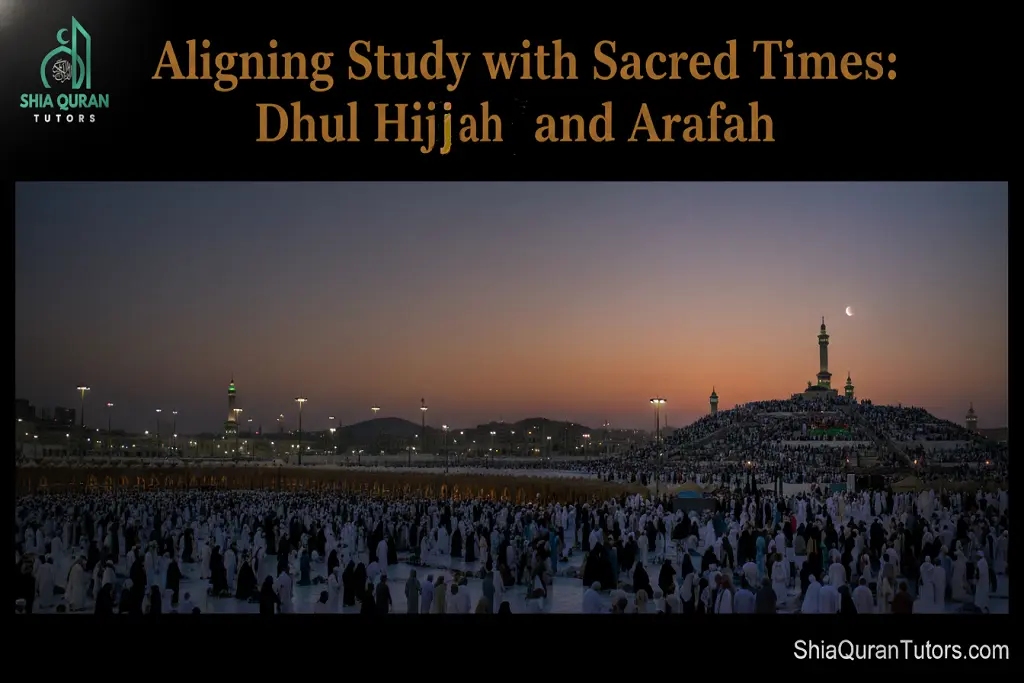
The pinnacle of the pilgrimage occurs on the ninth day of the month. It is a day of absolute forgiveness, profound supplication, and spiritual renewal.
The Visual Correlation: As you read the descriptions of the final resurrection in the opening verses of the Surah, visually correlate them with the vast gathering of pilgrims standing on the plains of ‘Arafah in total humility.
Structured Supplication: Use the final verses of the chapter to structure your personal prayers on this momentous day, asking for the strength to maintain consistent prostration, worship, and community service.
Conclusion: Activating Your Spiritual Journey
Studying surah al hajj offers far more than an intellectual exercise or a historical review. It serves as a comprehensive manual for lifelong spiritual development. By internalizing the urgent reminders of the opening verses, implementing the structured devotion highlighted in verse 77, and leveraging verified digital study tools, you can experience a deep internal transformation.
Commit today to moving beyond a surface-level reading. Download the necessary resources, set up a disciplined study schedule, and seek out qualified guidance to fully integrate the profound wisdom of this monumental chapter into your character and daily actions.
FAQs About Surah Al Hajj
What is the main theme of Surah Al Hajj?
Why does Surah Al Hajj have two prostrations (Sajdah)?
What are the primary benefits of surah al hajj?
Who should use the surah al hajj in translitertion pdf?
When is the Day of ‘Arafah 2026?

Best Shia Islamic Teacher Based on Qualifications and Reliable Sources
Evaluate an Islamic studies teacher through relevant qualifications, source handling and a short teaching demonstration.

Shia Quran Teacher for Shia Muslims and a Family Learning Plan
Home Shia Quran Teacher for Shia Muslims and a Family Learning Plan Plan Quran learning around your family. A Shia Quran teacher for Shia Muslims

Hire Shia Quran Teacher Using a Practical Selection Checklist
Use a practical checklist and trial observations to compare Shia Quran teachers before choosing tuition.