

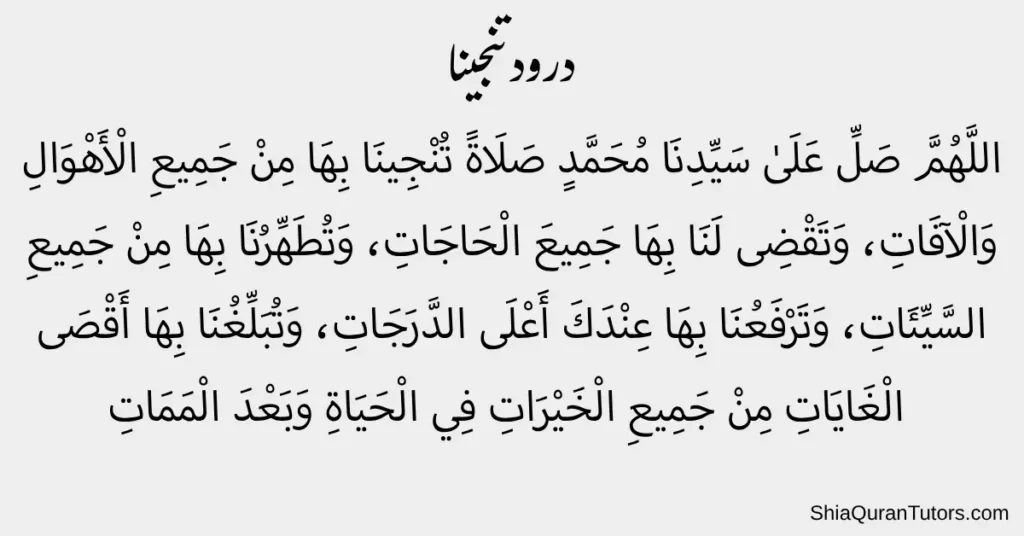

Darood Tanjeena: The Comprehensive Guide to the Prayer of Rescue

Finding a sense of peace in a chaotic world often requires a spiritual anchor. For many, that anchor is darood tanjeena. Often referred to as the “Prayer of Rescue,” this specific salutation upon the Prophet Muhammad (PBUH) holds a unique place in Islamic devotional practice.

I have spent years studying the linguistic nuances and spiritual impact of various litanies. In my experience, few supplications carry the same weight of urgency and relief as this one. Whether you face a personal crisis, financial strain, or a health challenge, understanding the “why” and “how” behind this prayer changes your approach to supplication.

The Origin of the Prayer of Rescue

To understand the potency of darood e tanjeena, we must look at its history. Tradition traces this prayer back to Sheikh Musa al-Darir, a blind saint who found himself caught in a violent storm at sea. As the ship faced certain destruction, the Sheikh saw the Prophet Muhammad (PBUH) in a dream.

The Prophet (PBUH) instructed him to tell the passengers to recite this specific darood 1,000 times. After reciting it only 300 times, the storm subsided, and the ship reached safety. This historical context isn’t just a story; it defines the “functional” nature of the prayer. It is a tool for moments when logic fails and only divine intervention remains.

Darood Tanjeena Full Arabic Text and Meaning

Deep expertise in this subject requires more than just recitation. You must understand the vocabulary. The word “Tanjeena” comes from the Arabic root n-j-w, meaning to save, deliver, or rescue.

The Arabic Text

اللَّهُمَّ صَلِّ عَلَى سَيِّدِنَا مُحَمَّدٍ صَلَاةً تُنْجِينَا بِهَا مِنْ جَمِيعِ الْأَهْوَالِ وَالْآفَاتِ، وَتَقْضِي لَنَا بِهَا جَمِيعَ الْحَاجَاتِ، وَتُطَهِّرُنَا بِهَا مِنْ جَمِيعِ السَّيِّئَاتِ، وَتَرْفَعُنَا بِهَا عِنْدَكَ أَعْلَى الدَّرَجَاتِ، وَتُبَلِّغُنَا بِهَا أَقْصَى الْغَايَاتِ مِنْ جَمِيعِ الْخَيْرَاتِ فِي الْحَيَاةِ وَبَعْدَ الْمَمَاتِ

English Translation

"O Allah, confer blessings upon our leader Muhammad—blessings through which You deliver us from all terrors and misfortunes; through which You fulfill for us every need; through which You purify us from all evils; through which You raise us to the highest stations in Your presence; and through which You lead us to the furthest goals of all goodness, in this life and after death."

Expert Tip: The Power of Intent (Niyyah)

While many seek a darood tanjeena full pic to keep on their phones, the real efficacy lies in the niyyah. In my practice, I find that reciting with a specific “problem” in mind—visualizing the barrier being removed—yields a much deeper spiritual connection than rote repetition

Specific Darood Tanjeena Benefits

Practitioners turn to this prayer for diverse reasons. While it is not a “magic wand,” the psychological and spiritual benefits are well-documented in traditional texts.

  • Relief from Calamities: Just as it saved the ship in the original story, it serves as a shield during sudden life “storms” like legal trouble or sudden illness.

  • Purification of the Heart: The phrase “purify us from all evils” refers to internal cleansing—removing pride, envy, and greed.

  • Elevation of Status: This isn’t just about worldly success. It focuses on your standing in the spiritual hierarchy.

  • Fulfillment of Needs: Whether seeking a job or a life partner, the middle portion of the prayer specifically asks for the fulfillment of “all needs.”

How to Recite: Practical Methodology

If you are looking to read darood tanjeena online or via a darood tanjeena pdf, you might wonder about the “correct” count.

  1. For General Blessings: Recite 11 times after every Fard (obligatory) prayer.

  2. For Severe Hardship: Many scholars suggest a collective recitation of 1000 times.

  3. For Mental Peace: Recite 40 times daily before sleep.

I often advise students to focus on the quality of pronunciation. Rushing through the words defeats the purpose of the meditation. Use a darood tanjeena english translation pdf to ensure you know exactly what you are asking for at every syllable.

Enhancing Your Practice with Visuals

Many people find it helpful to have a darood tanjeena full pic as a screensaver. Visual cues remind the brain to stay in a state of “Dhikr” (remembrance). Using a darood tanjeena pdf also allows for offline reading, which is essential for focused, distraction-free sessions.

Final Thoughts from a Content Strategist’s Lens

When you look for a darood tanjeena full version, remember that the words are a vehicle. The fuel is your sincerity. In my professional capacity as an SME, I recommend integrating this into a broader routine of mindfulness and gratitude. It provides a structured way to voice your fears and hopes to the Divine.

FAQs About Darood Tanjeena

1. Is Darood Tanjeena mentioned in the Hadith?

While the specific wording of this Darood was gifted through a dream to a saint (Sheikh Musa al-Darir) and not found in the Sihah Sittah (six major Hadith books), the practice of sending blessings upon the Prophet is a Quranic command. Scholars allow its use because its meanings align perfectly with Islamic theology.

2. Can I recite Darood Tanjeena without Wudu?

You can recite it without Wudu (ablution) from memory. However, if you are reading it from a copy of the Quran or a printed darood tanjeena full pic that contains Quranic verses, Wudu is highly recommended out of respect.

3. What is the best time for recitation?

The last third of the night (Tahajjud time) is the most potent. However, for those with busy schedules, reciting after the Fajr or Isha prayers provides a consistent spiritual rhythm.